In Partnership with Zurich Tourism
About Your Practice
How would you describe your practice in a sentence or two?
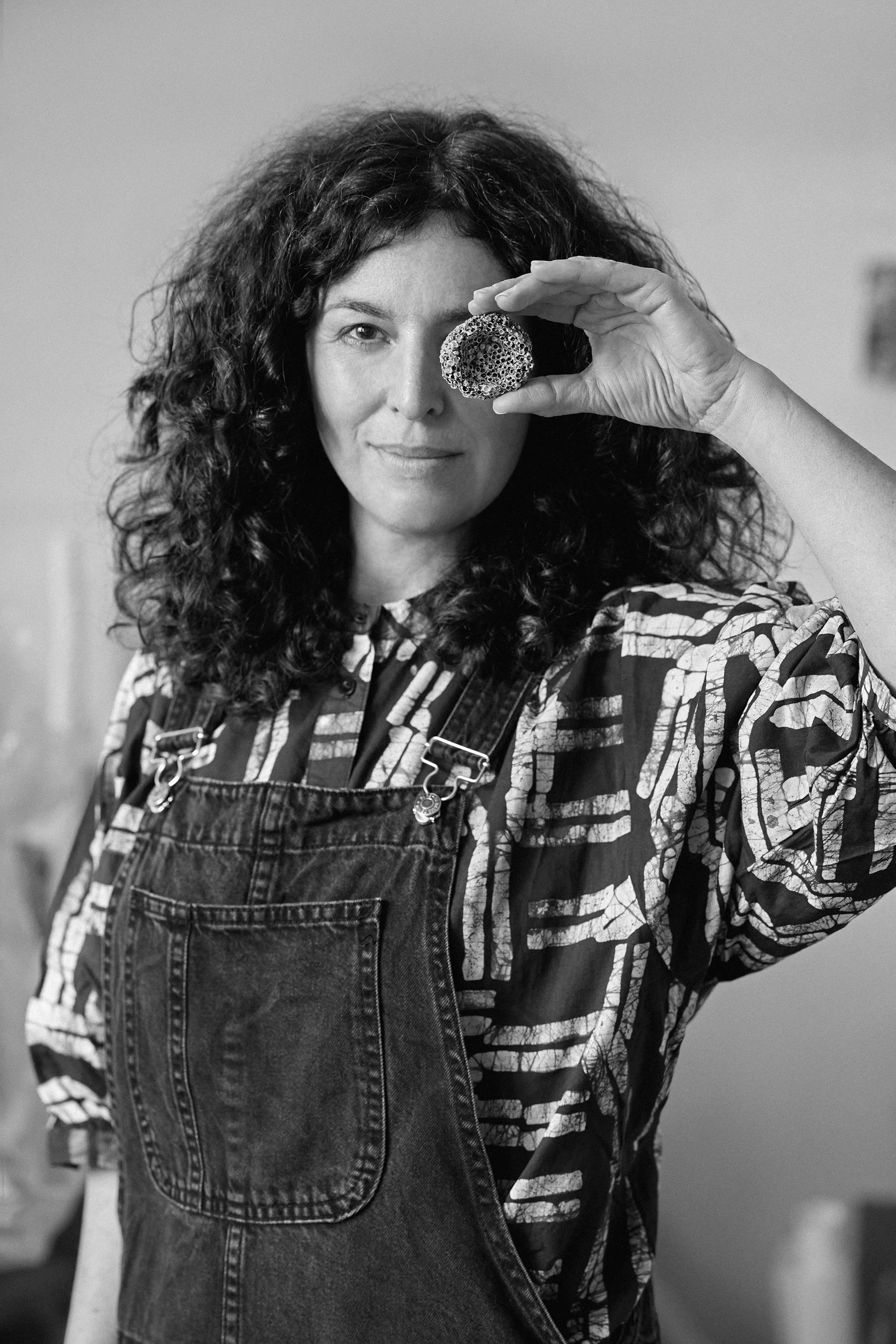
My background is in architecture, and that way of looking at space, material and function still strongly informs my practice. I am fascinated by objects and environments, and particularly in the relationship between the two, how a material, an object or a space can change our perception of the other.
My work often starts with looking closely at materials and the things that surround us, particularly things that are easily overlooked or discarded. I am interested in giving these materials another life through intuitive, direct processes, allowing their own qualities and imperfections to shape the work.
Is there a principle or value that guides your work, regardless of the project?
I try to stay open to what a material wants to do rather than forcing it into a predetermined idea. I am interested in allowing things to develop intuitively and in giving accidents, imperfections and unexpected forms a place within the process. I don’t always want to know exactly where something is going from the beginning. Sometimes the most interesting part of making is allowing the material to lead you somewhere you hadn't anticipated.
Who or what is a constant source of inspiration?
I am constantly inspired by my surroundings. I am very attentive to the small details that make a place feel particular, a material, a construction detail, the way light falls, or how something has been repaired or changed over time.
I also find a lot of inspiration in nature and in everyday life. I like observing things without necessarily looking for an immediate purpose or idea. Often, something stays in the back of my mind and only later finds its way into the work.
À propos de votre pratique
Comment décririez-vous votre pratique ?
Ma formation initiale est en architecture, et cette manière d'envisager l'espace, la matière et la fonction continue de nourrir profondément ma pratique. Je m'intéresse aux objets et aux environnements, et plus particulièrement à la relation entre les deux : comment une matière, un objet ou un espace peut transformer notre perception de l'autre.
Mon travail part souvent d'une observation attentive des matériaux et des choses qui nous entourent, en particulier celles que l'on néglige ou que l'on jette facilement. Je cherche à offrir une nouvelle vie à ces matériaux à travers des processus intuitifs et directs, en laissant leurs qualités propres et leurs imperfections façonner l'œuvre.
Y a-t-il un principe ou une valeur qui guide votre travail, quel que soit le projet ?
J'essaie de rester à l'écoute de ce qu'un matériau veut faire, plutôt que de le contraindre à une idée préconçue. J'aime laisser les choses se développer intuitivement, et donner une place, dans le processus, aux accidents, aux imperfections et aux formes inattendues. Je ne cherche pas toujours à savoir dès le départ où une pièce va me mener. Parfois, ce qu'il y a de plus intéressant dans le fait de créer, c'est de se laisser conduire par la matière vers un endroit qu'on n'avait pas anticipé.
Qui ou qu'est-ce qui vous inspire de façon constante ?
Je suis constamment inspirée par mon environnement et très attentive aux petits détails qui donnent à un lieu son caractère particulier : une matière, un détail de construction, la façon dont la lumière tombe, ou encore la manière dont quelque chose a été réparé ou transformé au fil du temps.
Je puise aussi beaucoup d'inspiration dans la nature et dans le quotidien. J'aime observer les choses sans nécessairement chercher une finalité ou une idée immédiate. Souvent, quelque chose reste en arrière-plan de mon esprit et ne trouve son chemin vers l'œuvre que plus tard.

About Zurich Design Weeks
Tell us about the project you're presenting at Zurich Design Week! What was the starting point or idea behind it? What do you hope visitors take away from experiencing it?
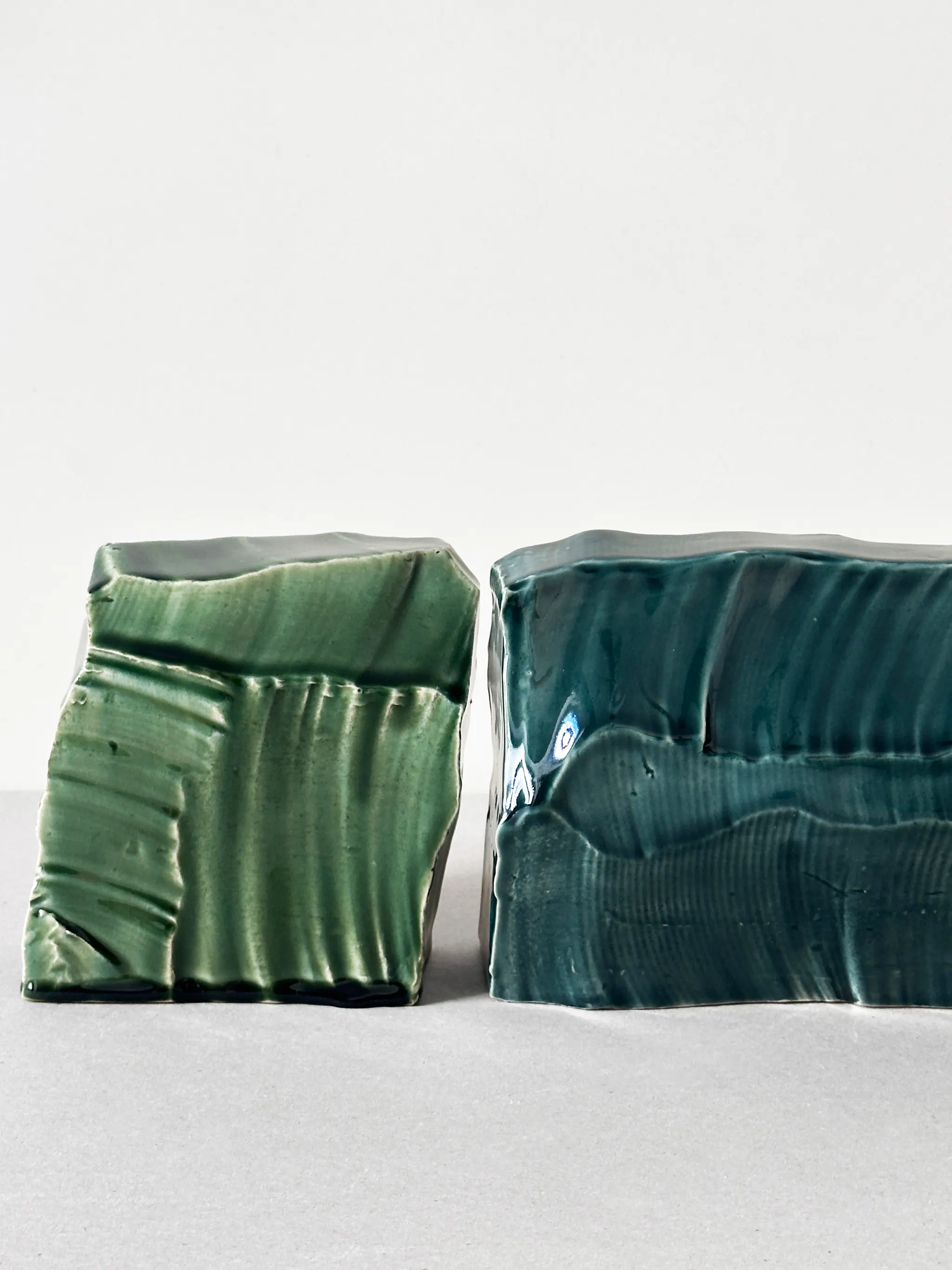
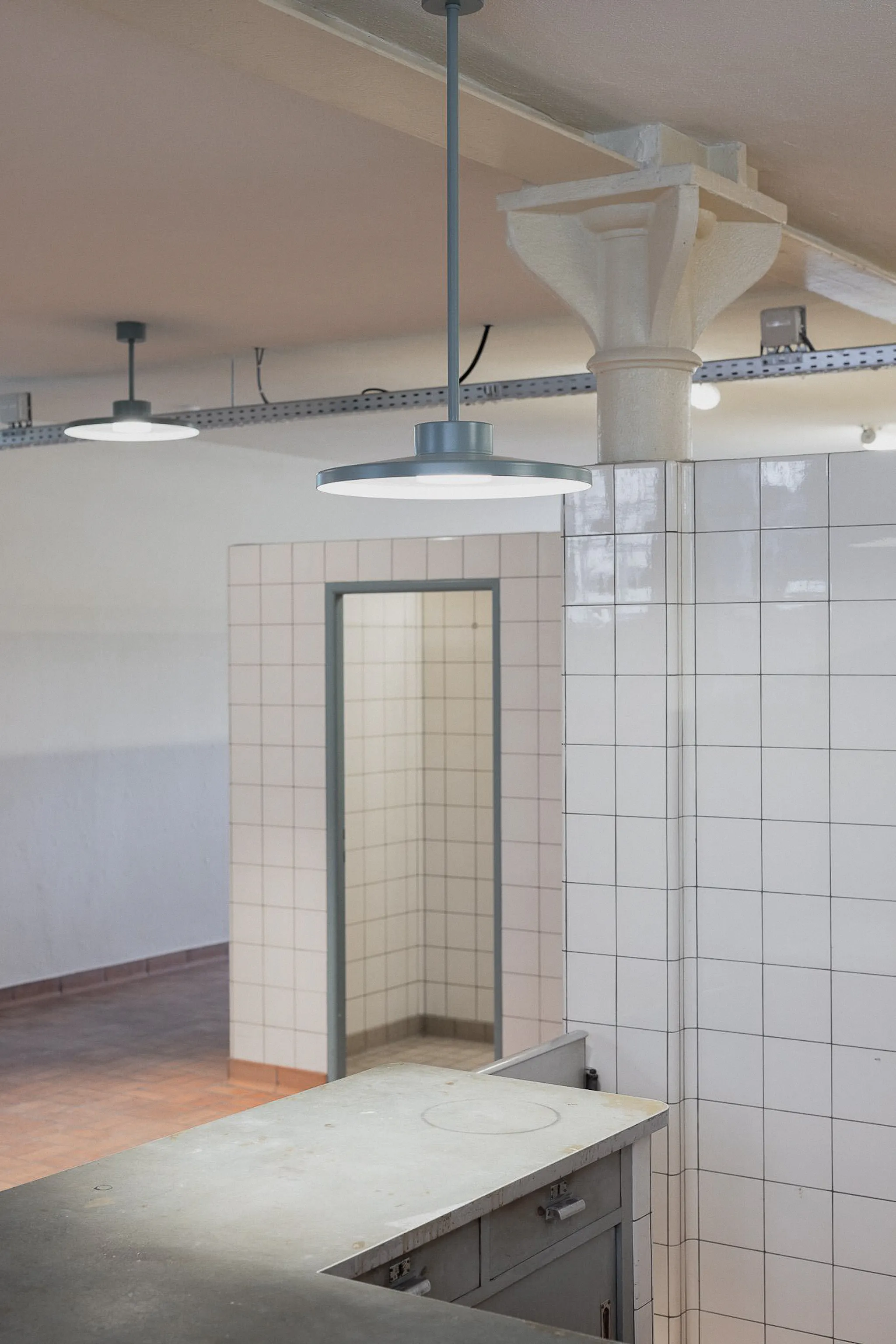
Dislocated Utility: Objects out of Place is a group exhibition that Paulina Reséndiz and I curate at the Waschraum in Zurich. In a way, the space itself was the starting point. When we first discovered it, we were fascinated by its former function as a place where SBB workers could wash and take care of themselves after work, at a time when personal living accommodations did not necessarily have bathrooms. Today, it has become an exhibition space, so there is already this sense of displacement built into the architecture.
The change of function made us think about what happens when objects are also removed from the context they were made for. We became interested in objects whose function or meaning is somehow unsettled. We selected works that sit somewhere between design, art and craftsmanship, objects where function is altered, questioned or perhaps no longer immediately clear.
We don't want the exhibition to give visitors a definition of what these objects are. Instead, we hope it creates a moment of uncertainty and curiosity, where you start asking yourself: What is this object for? Does it need to have a function to be design? And how much does context determine what we see in an object?
What is a detail in the piece you are hoping someone notices, but probably won't?
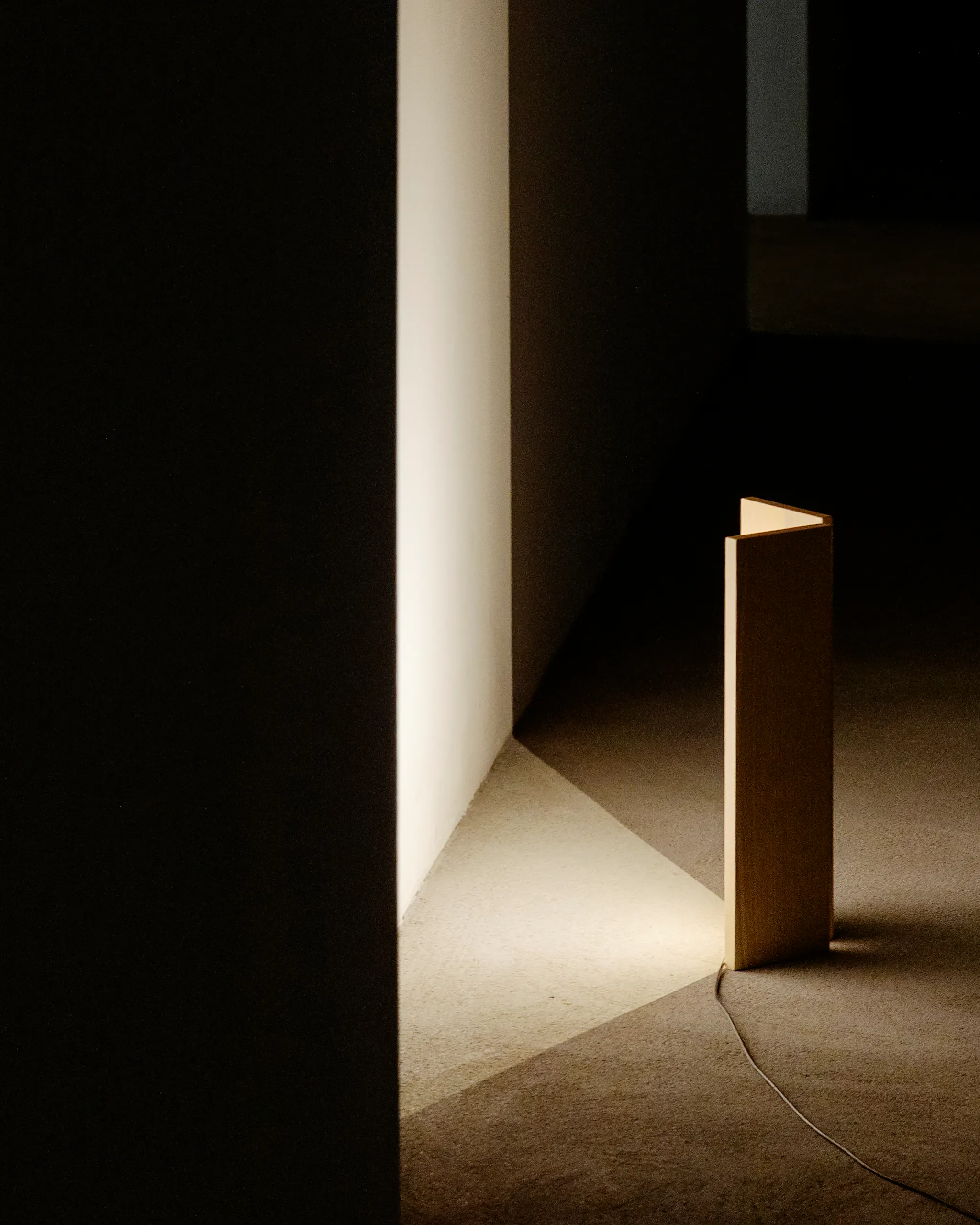
The thing I am interested in is not necessarily a particular detail in one object, but the relationship between the objects and the room. I naturally pay a lot of attention to how things sit within a space, their scale, their position, what they are next to and how that changes the way they are perceived.
The Waschraum has a very specific history and a very specific physical character, and I hope people notice how the works behave differently because they are placed there.
An object can feel completely different when you take it out of the context it was made for. Sometimes a small shift in position or context is enough to make something feel strange, poetic or even absurd. I think those subtle moments of displacement are what I hope people notice.
What makes Zurich Design Weeks worth getting on a plane, train or bus for?
For me, Zurich Design Weeks is interesting because it gives you an opportunity to experience design through the city rather than in one conventional exhibition setting. You can move between galleries, independent spaces, studios and places that you might not normally associate with design.
I also like that it encourages you to think about design in relation to its surroundings. Design is never completely isolated; the space around an object, the way you encounter it and the context it is placed in all influence how you experience it.
And I think Dislocated Utility: Objects out of Place fits quite naturally into that. The Waschraum isn't a typical white-cube exhibition space. Its previous life remains present, and that creates another layer to the works. You are not only looking at objects; you are also looking at them in relation to a place, its history and its former function.
À propos de Zurich Design Weeks
Parlez-nous du projet que vous présentez lors de la Zurich Design Weeks ! Quel a été le point de départ ou l'idée derrière ce projet ? Qu'espérez-vous que les visiteurs retiennent de cette expérience ?
Dislocated Utility : Objects out of Place est une exposition collective que Paulina Reséndiz et moi-même organisons au Waschraum à Zurich. D'une certaine manière, l'espace lui-même a été le point de départ. Quand nous l'avons découvert, nous avons été fascinées par sa fonction d'origine : un lieu où les employés des CFF pouvaient se laver et prendre soin d'eux après le travail, à une époque où les logements personnels n'avaient pas nécessairement de salle de bains. Aujourd'hui, il est devenu un espace d'exposition, si bien qu'un certain sentiment de déplacement est déjà inscrit dans l'architecture même du lieu.
Ce changement de fonction nous a amenées à réfléchir à ce qui se passe lorsque des objets sont eux aussi retirés du contexte pour lequel ils ont été créés. Nous nous sommes intéressées aux objets dont la fonction ou le sens se trouve d'une certaine manière déstabilisé. Nous avons sélectionné des œuvres qui se situent quelque part entre le design, l'art et l'artisanat, des objets dont la fonction est altérée, remise en question, ou peut-être plus immédiatement perceptible.
Nous ne voulons pas que l'exposition donne aux visiteurs une définition de ce que sont ces objets. Nous espérons plutôt qu'elle suscite un moment d'incertitude et de curiosité, où l'on commence à se demander : à quoi sert cet objet ? Doit-il avoir une fonction pour être considéré comme du design ? Et dans quelle mesure le contexte détermine-t-il ce que nous voyons dans un objet ?
Y a-t-il un détail que vous espérez que quelqu'un remarque, mais qui passera probablement inaperçu ?
Ce qui m'intéresse n'est pas nécessairement un détail particulier dans un objet, mais bien la relation entre les objets et la pièce. Je suis naturellement très attentive à la façon dont les choses habitent un espace, à leur échelle, à leur position, à ce à côté de quoi elles se trouvent et à la manière dont cela change leur perception.
Le Waschraum a une histoire et un caractère physique très particuliers, et j'espère que les visiteurs remarqueront à quel point les œuvres se comportent différemment du fait d'y être placées.
Un objet peut sembler complètement différent lorsqu'on le sort du contexte pour lequel il a été créé. Parfois, un léger déplacement dans la position ou le contexte suffit à rendre quelque chose d'étrange, de poétique, voire d'absurde. Je crois que ce sont ces moments subtils de déplacement que j'espère voir remarqués.
Pourquoi vaut-il la peine de venir à la Zurich Design Weeks ?
Pour moi, la Zurich Design Week est intéressante parce qu'elle offre l'occasion de découvrir le design à travers la ville plutôt que dans un cadre d'exposition conventionnel. On peut circuler entre galeries, lieux indépendants, ateliers et endroits qu'on n'associerait pas forcément au design.
J'apprécie aussi qu'elle incite à penser le design en relation avec son environnement. Le design n'est jamais totalement isolé : l'espace qui entoure un objet, la façon dont on le rencontre et le contexte dans lequel il s'inscrit influencent tous la manière dont on en fait l'expérience.
Et je pense que Dislocated Utility : Objects out of Place s'inscrit tout naturellement dans cette démarche. Le Waschraum n'est pas un espace d'exposition classique en white cube. Sa vie antérieure reste présente, ce qui ajoute une strate supplémentaire aux œuvres. On ne regarde pas seulement des objets ; on les regarde en relation avec un lieu, son histoire et son ancienne fonction.


About Your Zurich
When and where does Zurich surprise you?
I find it fascinating how well Zurich's public spaces are used and, perhaps more importantly, how much trust there is in the people using them. What I find special is how naturally nature is intertwined with the city: the rivers, the lake, the forests, and how you are really allowed to inhabit these places rather than simply look at them.
There is also a strong sense of respect for the person who comes after you. You can feel that these spaces are shared and that everyone has a responsibility towards them. I think that balance between freedom, nature and collective responsibility is something that continues to surprise me about Zurich.
If a visitor had one day in Zurich, where would you send them and what would you have them do?
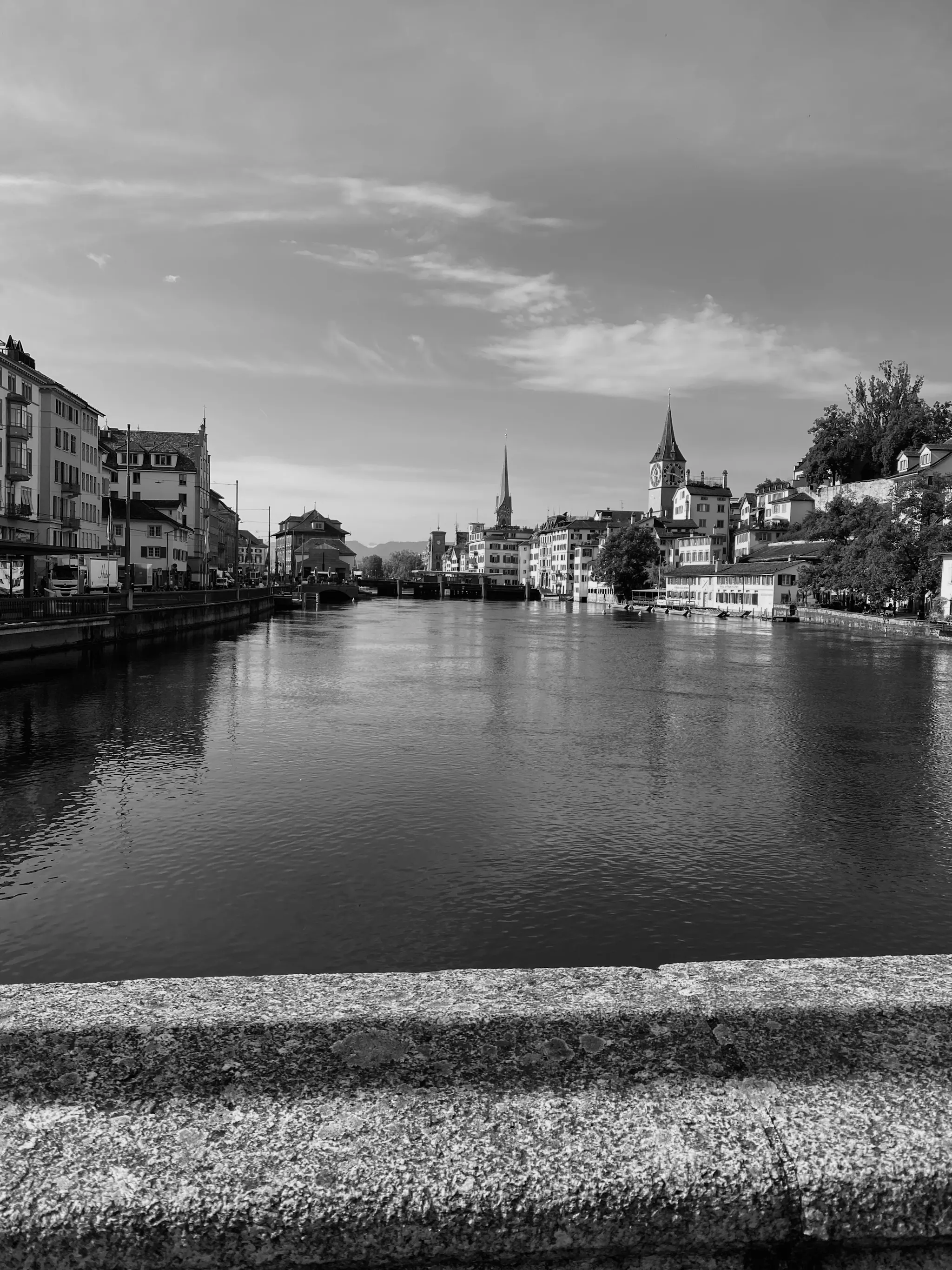
I would start the day with a coffee and a walk along the Limmat, then head up to the Polyterrasse for one of my favourite views over the city. From there, I would wander through the university quarter and down via the Rechberggarten towards the Kunsthaus.
For lunch, I would head towards the lake. Somewhere easy and relaxed like Fischer's Fritz is perfect, especially when the weather is good.
In the afternoon, I would explore some of the more independent parts of Zürich, particularly Kreis 3 or 5. I always enjoy wandering through the Viadukt, for example, browsing the smaller shops and design stores and picking up speciality foods.
For dinner, it depends on the mood, but Silex, Gül and Markthalle are a few that come to mind, among many others.
For me, the nicest way to experience Zürich is not to tick off the main sights, but to move through the city and get a feel for its architecture, public spaces, neighbourhoods and everyday life.
What is a small, specific Zurich ritual — a walk, a café order, a view — that has become yours?
I really love going for a jog along the Limmat and then ending up at Sphères for breakfast. It has become one of those small routines that makes the city feel like home.
À propos de votre Zurich
Où et quand Zurich sait-elle encore vous surprendre ?
Ce qui me fascine, c'est de voir à quel point les espaces publics de Zurich sont bien utilisés et, peut-être plus important encore, à quel point on fait confiance aux gens qui les fréquentent. Ce même esprit se retrouve dans la manière dont la nature s'entremêle à la ville, presque naturellement : les rivières, le lac, les forêts, et le sentiment d'être véritablement autorisé à habiter ces lieux plutôt que de simplement les regarder.
Il y règne aussi un profond respect pour la personne qui viendra après soi. On sent que ces espaces sont partagés, et que chacun en porte une part de responsabilité. Cet équilibre entre liberté, nature et responsabilité collective est, je crois, ce qui continue de me surprendre à Zurich.
Si un visiteur avait une seule journée à Zurich, où l'enverriez-vous et que lui feriez-vous faire ?
Je commencerais la journée par un café et une balade le long de la Limmat. Ensuite, je monterais à la Polyterrasse, qui offre l'une de mes vues préférées sur la ville. De là, je flânerais dans le quartier universitaire avant de redescendre par le Rechberggarten en direction du Kunsthaus.
Pour le déjeuner, je me rapprocherais du lac. Une adresse simple et détendue comme Fischer's Fritz est idéale, surtout quand il fait beau.
L'après-midi, j'irais explorer les quartiers au caractère plus indépendant, en particulier le Kreis 3 ou le Kreis 5. J'aime beaucoup flâner à Viadukt, par exemple, entre les petites boutiques et les magasins de design, et y faire quelques emplettes gourmandes.
Pour le dîner, tout dépend de l'humeur. Silex, Gül ou la Markthalle me viennent à l'esprit, parmi bien d'autres.
À mes yeux, la plus belle façon de découvrir Zurich n'est pas d'enchaîner les incontournables. C'est plutôt de se laisser porter par la ville et de s'imprégner de son architecture, de ses espaces publics, de ses quartiers et de sa vie quotidienne.
Quel est un petit rituel bien à vous à Zurich – une balade, une commande au café, une vue – qui est devenu vôtre ?
J'adore aller courir le long de la Limmat, puis finir mon parcours au Sphères pour prendre le petit-déjeuner. C'est devenu une de ces petites habitudes qui font qu'on se sent chez soi dans une ville.
Dislocated Utility: Objects out of Place
17.09.2026 – 27.09.2026
Waschraum, Former SBB Facility, Zurich
instagram.com/objectsoutofplace.ch
Dislocated Utility: Objects out of Place
17.09.2026 – 27.09.2026
Waschraum, ancien site des CFF, Zurich
instagram.com/objectsoutofplace.ch