AJ I feel like we needed an actual interview just to catch up. We are both all over the place, busy juggling new things ... So, how are you, Lucas? How are you in life?
LV Really good. Over the past couple of years, I have been transitioning from dancer to choreographer. And now that I have made it, I realise I only prepared for certain aspects of this new life. Do you know what I mean?
AJ I do, actually.
LV I had a teacher back at university who used to say that what matters isn't arriving from point A to point B, but the path you take to get there. Because once you arrive at point B, it rarely looks like what you imagined.
AJ In my career as a dancer, I feel like I arrived at point B, which was being a dancer, maybe a principal dancer. But now, in this transition towards a new point B in my life, I don't feel like I have arrived yet, not fully. Yes, I am surviving in the world outside of dance, but I wonder if I will ever feel like I have gotten to where I originally hoped to end up.
LV But maybe there is beauty in this not knowing, too. I don't want to be limited to one thing in that way ever again.
AJ I don't know how many things I have going on right now — maybe a little too many, actually, and I am still figuring a lot of it out — but it is really nice to have that variety, to be able to dip in and out. You, on the other hand, are now being recognised on the international stage as a choreographer and making amazing strides in that world. But you also compose music, you DJ, you are studying psychology… Where does everything fit in? Is it all in service of the choreography, or does everything else stand on its own?
LV That's an interesting question. I'd say yes; at the moment it is all in the service of choreography. That is the thing I truly want to do now: living off choreography, signing with several companies, with the next two or three years already scheduled. It gives me a real sense of calm and direction.
AJ I am so happy to hear that!
AJ Es hat tatsächlich diesen Interview-Termin gebraucht, damit wir einander wiedermal sehen! Wir sind beide ständig unterwegs, völlig absorbiert von neuen Projekten … Also: Wie geht es dir, Lucas? Wie geht es dir im Leben?
LV Sehr gut. In den letzten paar Jahren hat sich mein Fokus vom Tanz zur Choreografie verschoben. Und jetzt, wo ich in dieser neuen Welt Fuss gefasst habe, merke ich, dass ich mich nur auf bestimmte Aspekte dieses neuen Lebens vorbereitet hatte.
AJ Ich weiss genau, was du meinst.
LV Einer meiner Lehrer sagte immer, es gehe nicht darum, von Punkt A nach Punkt B zu kommen, sondern um den Weg dahin. Denn wenn man an Punkt B ankommt, sähe dieser selten so aus, wie man es sich vorgestellt hatte.
AJ In meiner Karriere als Tänzer wusste ich genau, wann Punkt B erreicht war. Aber jetzt, in diesem Übergang zu einem neuen Punkt B in meinem Leben, fehlt mir dieses Gefühl. Ja, ich überlebe in der Welt ausserhalb des Tanzes, aber ich frage mich, ob ich je ankommen werde, wo ich ursprünglich hinwollte.
LV Aber vielleicht liegt gerade in diesem Nicht-Wissen auch eine gewisse Schönheit. Ich möchte mich nie wieder auf eine einzige Sache beschränken müssen, so wie wir es damals taten.
AJ Ich weiss gar nicht, wie viele Dinge ich gerade am Laufen habe – ein bisschen zu viele, ehrlich gesagt – aber ich geniesse diese Vielfalt, dieses Eintauchen und wieder Loslassen. Du dagegen machst dir gerade international einen Namen als Choreograf. Gleichzeitig komponierst du Musik, legst als DJ auf, studierst Psychologie… Wo findet das alles seinen Platz? Steht das alles im Dienst der Choreografie?
LV Gute Frage. Ich würde sagen: ja, im Moment steht alles im Dienst der Choreografie. Das ist es, was ich machen will: von der Choreografie leben, mit Companies zusammenarbeiten, die Engagements der nächsten zwei, drei Jahre konkret geplant zu haben. Das gibt mir ein Gefühl von Ruhe und Richtung.
AJ Das freut mich so für dich!

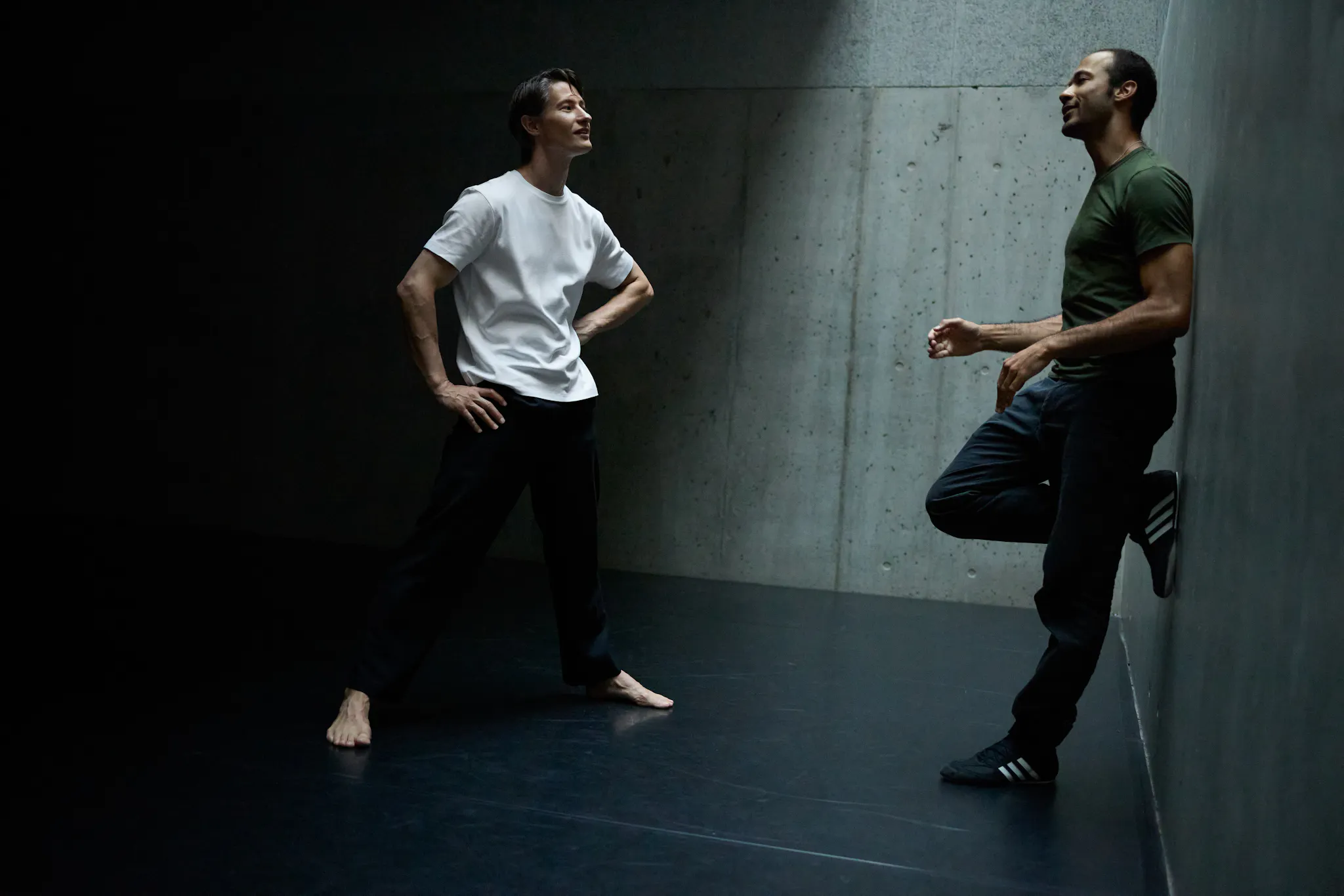
LV But obviously this new life comes at a cost, too. I was so focused on arriving at this new point B that I didn't realise what being there actually meant. Being at home for maybe a month out of the whole year, living in hotel rooms, without family, without your loved ones around, sitting there some nights with just your computer, your phone, maybe a book, and no one else. It feels like, life-wise, I wasn't as prepared as I thought I was. I didn't understand that a six-week commission in a city where I know no one means six weeks being by myself. I am very happy about where I am, I achieved what I set out to achieve, but now I need to understand how to actually live through it.
AJ That is such a real thing to sit with. Actually, speaking of new chapters, did I tell you about WinnDance?
LV You did not.
AJ I thought when I left the theatre in 2023 that I wouldn't dance on stage again, but then some things in life you just can’t say no to. I was asked to be part of a newly launched dance company — a new old company, in a way, because it might be new, but it is full of oldies. I am the youngest at 40 years old, and the oldest is Nora Kimball at 69. We gave our debut at the Biennale in Venice earlier this month and are now going on a world tour. The pieces are choreographed by some of the biggest names in dance, like John Neumeier or Imre & Marne van Opstal.
LV I love that!
AJ The mission of WinnDance is to transform the perception of age in dance and challenge the constraints imposed by industry standards. We want to prove that age is not a limitation, but a powerful expression of experience, depth and artistic maturity.
LV And how does it feel to be back in a company?
AJ I realised that what I had missed wasn't going to class, wasn't being on stage, wasn't the adrenaline or the pressure. It was that feeling of community — going in every day and being with a group of people you actually love, or learn to love, and respect, and appreciate. It was really nice to feel that again, especially with that caliber of dancers — Diana Vishneva, Gil Roman, Igone de Jongh, Marijn Rademaker, Polina Semionova. They are artists I admire deeply and the thought of dancing alongside them made me nervous at first. But then I walked into our first practice, and I realised that we are all here because of our wish to share this space again.
LV Aber das alles hat auch seinen Preis. Ich war so darauf fokussiert, meinen neuen Punkt B zu erreichen, dass mir nicht bewusst war, was es tatsächlich bedeutet, dort anzukommen. Vielleicht einen Monat im Jahr zuhause zu sein, den Rest in Hotelzimmern zu leben, ohne Familie, ohne die Menschen, die man liebt. Abende zu verbringen nur mit dem Computer, dem Handy, vielleicht einem Buch, sonst niemandem. Rückblickend war ich nicht so gut auf dieses Leben vorbereitet, wie ich dachte. Mir war nicht klar, dass ein sechswöchiges Engagement in einer Stadt, in der ich niemanden kenne, auch sechs Wochen bedeutet, während denen ich komplett auf mich allein gestellt bin. Ich bin glücklich, wo ich stehe, ich habe erreicht, was ich mir vorgenommen hatte. Jetzt muss ich lernen, mit dieser neuen Realität zu leben.
AJ Das ist wohl etwas, in das man erst hineinwachsen muss. Aber apropos neue Kapitel, habe ich dir eigentlich schon von WinnDance erzählt?
LV Hast du nicht.
AJ Als ich die Company 2023 verliess dachte ich, dass ich nie wieder auf einer Bühne tanzen würde. Aber es gibt Dinge im Leben, zu denen man einfach nicht Nein sagen kann. Ich wurde gefragt, ob ich Teil einer neuen Tanz-Company sein möchte — eine neue, alte sozusagen, denn sie mag zwar neu sein, ist aber voller Oldies. Ich bin mit 40 Jahren der Jüngste, die Älteste ist Nora Kimball mit 69. Unser Debüt hatten wir vor kurzem an der Biennale in Venedig, jetzt geht es auf Welttournee. Die Choreographien stammen von einigen der grössten Namen in der Industrie, wie John Neumeier oder Imre & Marne van Opstal.
LV Das klingt grossartig!
AJ Die Mission von WinnDance ist es, die Wahrnehmung von Alter im Tanz zu verändern und die Grenzen, die von Branchenstandards vorgegeben werden, herauszufordern. Wir wollen zeigen, dass Alter keine Einschränkung ist, sondern ein kraftvoller Ausdruck von Erfahrung, Tiefe und künstlerischer Reife.
LV Und wie fühlt es sich an, wieder Teil einer Company zu sein?
AJ Mir wurde klar, dass ich weder das Proben, noch die Bühne, noch den Adrenalinschub oder den Druck vermisst hatte. Es war die Gemeinschaft. Jeden Tag mit Menschen zusammen zu sein, die man wirklich liebt, oder lieben lernt, respektiert und schätzt. Es war schön, das wieder zu spüren, vor allem mit Tänzerinnen und Tänzern dieses Kalibers – Diana Vishneva, Gil Roman, Igone de Jongh, Marijn Rademaker, Polina Semionova. Das sind Künstlerinnen und Künstler, die ich zutiefst bewundere. Der Gedanke, mit ihnen zusammen zu tanzen, hat mich anfangs richtig nervös gemacht. Aber dann betrat ich unsere erste Probe, und ich wusste sofort: Wir alle sind aus demselben Grund hier. Wir alle wollten dieses Miteinander wieder spüren.
LV I can relate so much to what you said about community. As a professional dancer, whether you like it or not, you belong to a group; you belong to something bigger than yourself. You work with 30, 40, 50 people every day, several hours a day, and you build a bond without even trying. Only after I left the company did I realise that I had built my entire personality around knowing that collective was always there. And then, from one day to the next, you are on the outside. That's it. And even if you find another group you spend that much time with — which is really unlikely to happen — you would long for the physical closeness, the shared pressure, the shared rush of performing that generates a deep bond that really is like no other.
AJ It is a bond unlike anything else I have experienced.
LV Also, as dancers, we are constantly switching roles, so we are going through so many different experiences together. Whereas if you're a volleyball player, the goal is always the same, and your role stays pretty much the same too.
AJ I guess you might see a range of emotions if your team wins or loses or someone gets injured. But with us, we actually have to open up and draw on our own life experience to show emotions that are perceptible to the audience.
LV And that openness looks different every time, too. In one production we are enemies fighting to the death, like Romeo and Tybalt. In the next, we are side by side, or even barely interacting at all, like in Swan Lake. Every role asks something different of us emotionally, and that is what generates a deeper knowledge of each other, too.
AJ That's exactly it, and that knowledge is what makes us function as a team. I give 1:1 coaching and lead team-building events in corporate settings with non-dancers — normal people, as we say. I am fascinated by the mind and body connection, and I can draw on so many experiences from my years of performing on stage and working on large teams. I often say the difference between a regular team and a team of dancers is that the latter share one specific goal, one obvious shared intention: exceptional performances, night after night. Conventional teams don't always have that.
LV Als Tänzer bist du Teil einer Gruppe, ob du willst oder nicht; du gehörst zu etwas Grösserem als dir selbst. Man arbeitet jeden Tag mehrere Stunden mit 30, 40, 50 Menschen zusammen, da entsteht ganz automatisch eine Verbindung. Erst als ich die Company verliess, wurde mir klar, dass meine ganze Persönlichkeit darauf aufbaute, dass dieses Kollektiv immer da ist. Und dann, von einem Tag auf den anderen, bist du raus. Das war's. Und selbst wenn man eine andere Gruppe findet, mit der man so viel Zeit verbringt – was ziemlich unwahrscheinlich ist –, würde einem die körperliche Nähe fehlen, der gemeinsame Druck, der gemeinsame Rausch des Auftretens, der eine so tiefe Verbindung schafft, wie man sie sonst nirgendwo findet.
AJ Eine Verbindung, wie ich sie sonst nie erlebt habe.
LV Was diese Verbindung noch intensiver macht, ist, dass wir als Tänzer ständig die Rolle wechseln. Und mit jeder lernen wir einander anders, neu kennen. Bei etwa einer Volleyballspielerin hingegen bleibt das Ziel immer dasselbe, die eigene Rolle bleibt weitgehend gleich.
AJ Ich schätze, bei einem Volleyballteam zeigt sich das Spektrum an Emotionen nur, wenn das Team gewinnt, verliert, oder sich jemand verletzt. Bei uns ist das anders: Wir müssen uns ständig öffnen, schöpfen emotional permanent aus dem eigenen Leben, damit das, was wir mit Tanz zu erzählen versuchen, für das Publikum spürbar wird.
LV Mal bist du Todfeind, wie Romeo und Tybalt, mal engste Vertraute, mal trägst du jemanden, mal stehst du allein im Scheinwerferlicht – jede Rolle verlangt uns emotional etwas anderes ab, und genau das lässt uns einander noch besser kennenlernen.
AJ Genau das ist es, und dieses tiefe Kennenlernen ist es, was uns als Team funktionieren lässt. Ich gebe 1:1-Coachings und leite Team-Building-Events in Firmen mit Nicht-Tänzern – normalen Menschen, wie wir sagen. Mich fasziniert die Verbindung zwischen Körper und Geist, und ich kann dabei aus so vielen Erfahrungen schöpfen, die ich in meinen Jahren auf der Bühne und in grossen Teams gesammelt habe. Ich sage oft, der Unterschied zwischen einem gewöhnlichen Team und einem Team aus Tänzerinnen und Tänzern ist, dass Letztere ein ganz konkretes, gemeinsames Ziel teilen: aussergewöhnliche Leistungen, Abend für Abend. Diese Klarheit fehlt in anderen Teams oft.
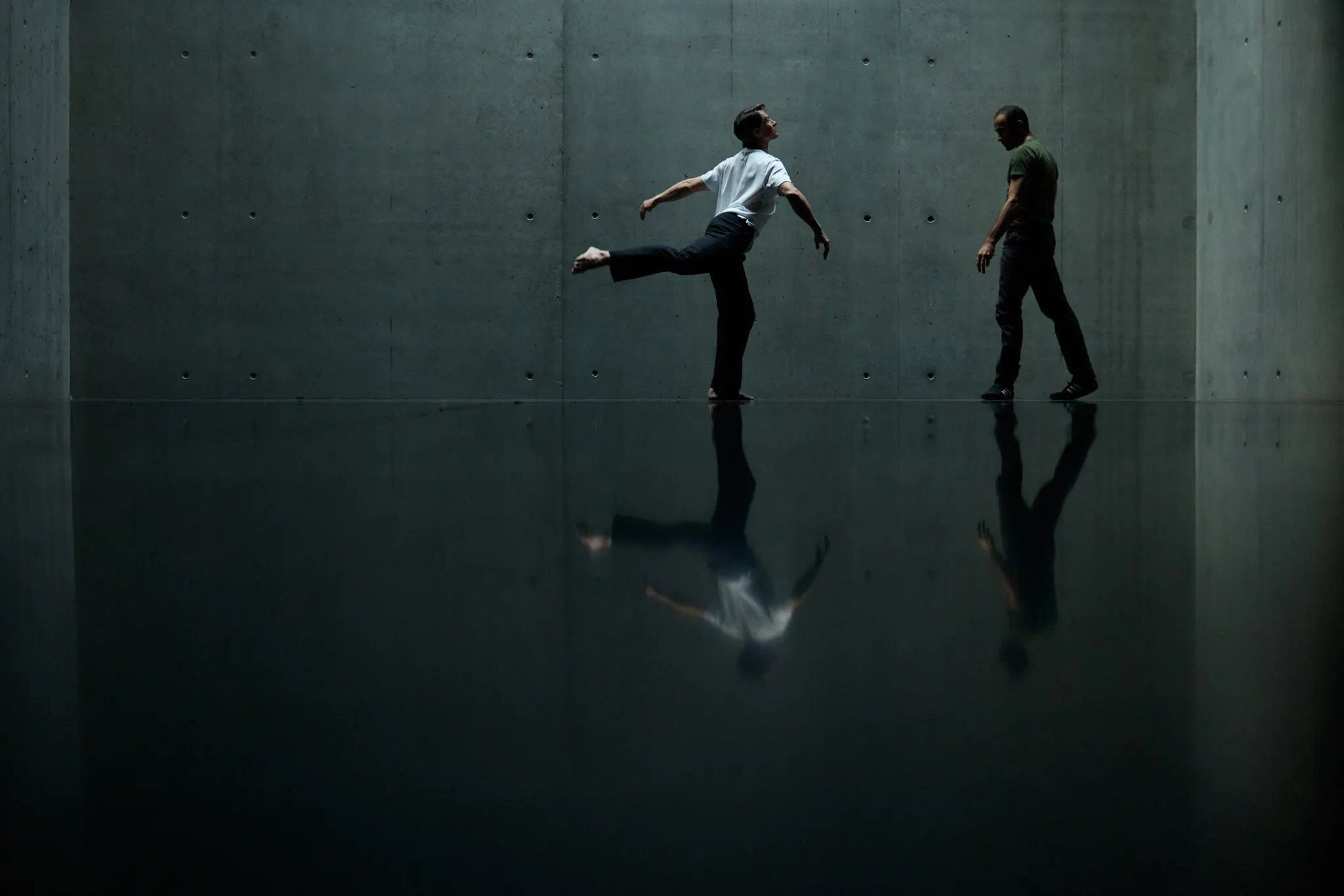
LV I think for us, that clarity comes more easily. When we show up to, say, put on a production, we know exactly what the end goal is. Even if you have your own private agenda, there's no version of it that doesn't run through the show working as a whole.
AJ And when we work well together as a team, the audience doesn't see the mistakes we make.
LV One of the biggest differences between the experienced dancer and the inexperienced dancer is how they handle things going wrong. And things do go wrong, every single time. An experienced dancer is the one who gives the feeling that everything went right, always. An inexperienced one, however, whenever one small thing goes wrong, lets it become transparent, lets it affect everything else.
AJ I remember doing that a lot when I was starting out. One thing would go wrong, and although nothing else did, it felt like everything else had, too. With time you learn that it is all about not dwelling on that mistake but overcoming it as quickly as possible.
LV And it doesn't stop with your own mistakes; sometimes you have to manage other people's, too. Being a tall man, I often found myself dancing in the back. So however many hours of rehearsal I put in, however precisely I knew the counts, I was still dancing behind someone. My attention wasn’t only on the music; it was on following the person in front of me. Even when I knew they got it wrong, I still followed them, because the priority was, always is, the ensemble. That mindset is what makes a group a good group: that the pride of being technically correct never outweighs the goal of dancing as one.
AJ Being a good leader isn't only about leading; it is also about knowing how and when to follow.
LV That's a very good point. I believe I am good at following, because I have practiced it so much. So whenever I have to lead, I know exactly what it takes – what I am looking for, where the confusing points are. If I make my movements too small, or too abrupt, people will not be able to keep up.
AJ I imagine that skill must serve you well as a choreographer, too. Shifting to that topic: do you have a go-to starting point for a new creation? I know for some choreographers it's music, for others it's the dancers in front of them, or a topic they have wanted to approach for a while …
LV I still qualify as a young choreographer, but, already, to this point, there have been many different ones.
AJ In terms of experience though, I'd say you wouldn't get away with the young choreographer label anymore.
LV Ich glaube, bei uns ergibt sich diese Klarheit von selbst. Wenn wir zusammenkommen, um zum Beispiel eine Produktion auf die Bühne zu bringen, wissen wir genau, was das Ziel ist. Selbst die eigenen, persönlichen Ambitionen ordnen sich letztlich dem unter, dass das Stück als Ganzes gelingt.
AJ Und wenn wir als Team gut funktionieren, bleiben unsere Fehler für das Publikum unsichtbar.
LV Einer der grössten Unterschiede zwischen einem erfahrenen und einem unerfahrenen Tänzer ist, wie er mit Dingen umgeht, die schieflaufen. Und irgendetwas läuft immer schief, jedes Mal. Der Erfahrene vermittelt das Gefühl, es habe alles perfekt geklappt. Beim Unerfahrenen hingegen reicht eine Kleinigkeit, und alles andere gerät ins Wanken.
AJ Ich erinnere mich, dass mir das zu Beginn oft passiert ist. Eine Kleinigkeit ging schief, und obwohl alles andere geklappt hatte, fühlte es sich an, als wäre alles schiefgelaufen. Mit der Zeit lernt man, sich nicht in diesem einen Fehler zu verlieren, sondern ihn so schnell wie möglich zu überwinden.
LV Und es bleibt nicht bei den eigenen Fehlern; manchmal muss man auch die der anderen tragen. Als grosser Mann tanzte ich oft in den hinteren Reihen der Gruppe. Egal, wie viele Stunden ich probte, egal, wie genau ich die Zählzeiten kannte: Meine Aufmerksamkeit lag nie nur auf der Musik, sondern darauf, der Person vor mir zu folgen. Selbst wenn ich wusste, dass sie falsch tanzte, folgte ich ihr trotzdem, denn die Priorität war, und ist bis heute, das Ensemble. Diese Haltung macht eine Gruppe zu einer guten Gruppe: dass der Stolz, selber fehlerfrei zu bleiben, nie das Ziel überwiegt, gemeinsam als eins zu tanzen.
AJ Gut zu führen bedeutet nicht nur, voranzugehen; es bedeutet auch, zu wissen, wie und wann man folgen sollte.
LV Das ist ein sehr guter Punkt. Ich glaube, ich bin gut im Folgen, weil ich das so oft geübt habe. Wenn ich also führen muss, weiss ich genau, worauf es ankommt. Wenn ich meine Bewegungen zu klein oder zu abrupt mache, verliere ich diejenigen, die hinter mir stehen.
AJ Dieses Wissen dürfte dir als auch Choreograf zugutekommen. Um zum Thema zu wechseln: Hast du einen festen Ausgangspunkt für eine neue Kreation? Ich weiss, dass es bei manchen Choreografinnen und Choreografen die Musik ist, bei anderen die Tänzerinnen und Tänzer vor ihnen, oder ein Thema, das sie schon länger beschäftigt …
LV Ich gelte zwar noch als junger Choreograf aber allein bis hierhin gab es schon so viele verschiedene…
AJ Bei deiner Erfahrung in der Tanzwelt würde ich sagen, mit dem Label Jungchoreograf kommst du nicht mehr durch.
LV I was having this conversation recently, someone joking that I am so old. But it is all a matter of framing. I am super young for a choreographer, but of course, as a dancer, I am old.
AJ That is still the rule, isn’t it? At 40, you're old, it's over, you're out. And yes, from the point of view of athleticism, of the physicality required in ballet, maybe there is some truth to it. But as an artist, life goes on. John Neumeier once said something along the lines of: Dance must mirror humanity. And humanity, surely, isn't limited to a certain age group. The fact that we have so few dancers with any real artistic outlet after the age of 40 is crazy. I think there is a big audience out there who would want to see older dancers, telling different stories, sharing emotions you can only really convey once you have lived them.
LV That sure is true. But there is another side to it, too. Dance expects full dedication, not just physically, but in terms of time and mental energy. As you mature, other things in life start to matter more and more, until eventually, dance is no longer the priority. And sadly, it is usually the richness of that fuller life that makes you a better, more complex artist.
AJ That is exactly what I love about WinnDance: we come together for a stretch, learn the material, share that experience of being in the studio. Then we return to our other commitments, our families, our jobs, our life goals. And once we reunite, we do not just pick up the choreography again; we bring the rest of our lives back into the room with us. But I will admit something, too. Being chosen to stand among world-class dancers like that, there is something deeply flattering in it. A certain amount of ego, if I am honest.
LV That is such an honest thing to admit. As a dancer, your whole existence can become ego-related. You are an image on stage, and if you do your job well, you get admired, you get praised. That is nice. But it isn’t everything.
LV Kürzlich hat mich jemand scherzhaft alt genannt. Aber das ist alles eine Frage des Blickwinkels. Für einen Choreografen bin ich jung, aber klar, für einen Tänzer natürlich nicht mehr.
AJ Diese Einstellung herrscht noch immer. Mit 40 bist du alt, es ist vorbei, du bist raus. Und ja, was die körperlichen Anforderungen im Ballett betrifft, mag da etwas Wahres dran sein. Als Künstler jedoch hört man nicht einfach auf zu wachsen. John Neumeier hat einmal gesagt: Tanz muss die Menschheit widerspiegeln. Und die Menschheit ist ja nicht auf eine bestimmte Altersgruppe beschränkt. Dass wir so wenige Tänzerinnen und Tänzer haben, die nach ihrem 40. Lebensjahr noch ein echtes künstlerisches Ventil finden, ist verrückt. Ich glaube, da draussen gibt es ein grosses Publikum, das gerne ältere Tänzerinnen und Tänzer sehen würde, die andere Geschichten erzählen, die Emotionen teilen, die man erst wirklich vermitteln kann, wenn man sie erlebt hat.
LV Das stimmt sicher. Und doch, Tanz verlangt volle Hingabe, nicht nur körperlich, sondern auch, was Zeit und mentale Energie betrifft. Mit zunehmender Reife beginnen andere Dinge im Leben mehr und mehr zu zählen – bis Tanz irgendwann nicht mehr die Priorität ist. Und traurigerweise ist es meist genau der Reichtum dieses volleren Lebens, der einen zu einem besseren, komplexeren Künstler macht.
AJ Genau das liebe ich an WinnDance: Wir kommen für eine gewisse Zeit zusammen, lernen das Material, und geniessen es, gemeinsam im Studio zu sein. Dann kehren wir zu unseren anderen Verpflichtungen zurück, zu unseren Familien, unseren Jobs, unseren Leben. Wenn wir wieder zusammenkommen, nehmen wir nicht einfach die Choreografie wieder auf, wir bringen den Rest unserer Realitäten mit in die Probe. Aber wenn ich ganz ehrlich bin, gibt es schon auch einen simpleren Grund, warum ich Teil dieses Projekts sein wollte: Als einer von so aussergewöhnlichen Tänzerinnen und Tänzern ausgewählt worden zu sein, das schmeichelt dem Ego sehr.
LV Schön, dass du das zugeben kannst. Als Tänzer ist die eigene Existenz doch immer stark egogetrieben. Du bist ein Bild auf der Bühne, und wenn du deinen Job gut machst, wirst du bewundert, wirst du gelobt. Das fühlt sich gut an. Aber es ist nicht alles.
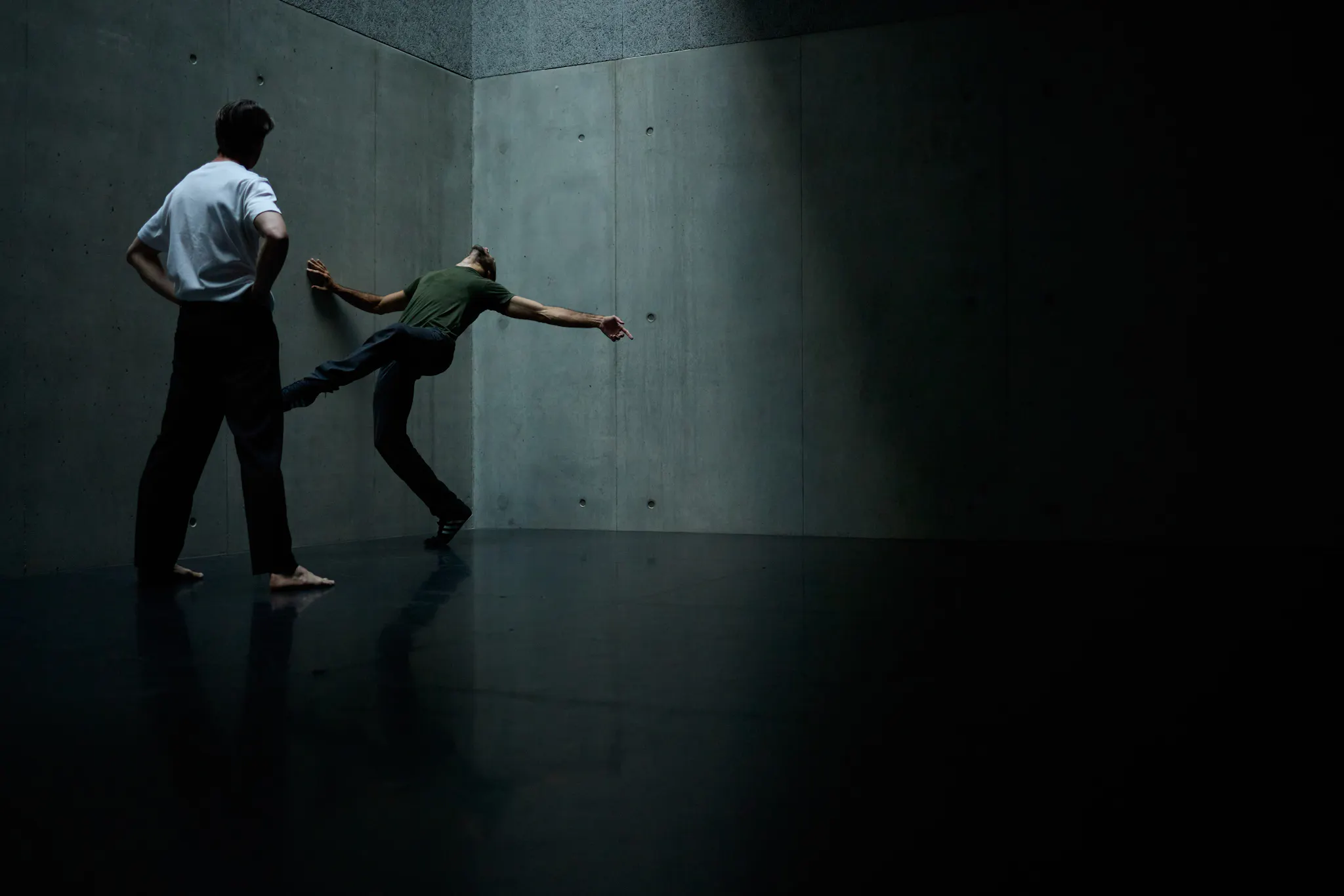
AJ I feel my life now is all about making dance more accessible to people, not just as something to watch from a distance, but as something to learn from: the soft skills we develop, the non-verbal communication, the awareness of the body. Most recently, that vision became Rare, a company I co-founded to bring dance to audiences outside opera houses, into brand shoots, private events, internal company gatherings. Dance is having a cultural moment. A lot of people simply do not have access to that world, but once they experience it, they value it deeply. Because right now, as a society, we are becoming more and more disconnected. More and more people struggle to feel comfortable in social settings, and that is largely because certain jobs isolate us, from other people, from ourselves, from our own bodies. Live performance does something nothing else can. It stops time, opens the mind, reminds us how it feels to be fully present.
LV I have spent a lot of time diving into the origins of music and dance lately. Of course, it isn’t fully traceable, but there is a consensus around drumming and stomping feet on the ground as the origin of rhythm and pattern, which, obviously, directly relates to dance. Those rituals were tightly tied to not only mourning but celebration. There is something in moving our bodies to a rhythm which feels very natural to us.
AJ But many of us have lost that natural connection to it, at least here in Northern European cultures.
LV I think that instinct never really disappears. I remember, as a kid, growing up in Brazil, celebrating carnival. Whenever a drumming group passed by, I would feel my body get taken over by the sound, the vibration, the hundreds of people drumming together, perfectly in sync. And that feeling is not so different from what people experience in club culture: a rhythmic pattern with a strong lead, something your body responds to instinctively. Even though it comes through a very different environment, the connection is the same.
AJ According to music science, tracks are often built around 135 to 145 BPM, close to the heart's natural rhythm when the body is in slight movement, so that people's hearts fall into step with it almost automatically — with the music, with the rhythm, with the room. Everybody is moving, everyone adopts that same pulse, that same beat. Still, many live lives that are very removed from such experiences. I saw a quote the other day that said: A culture that is removed from dance is a culture we should be worried about, or something like that. I found that interesting. But the light is fading. Let’s stop talking, and let’s dance.
AJ Mein Leben dreht sich heute vor allem darum, Tanz für mehr Menschen zugänglich zu machen – nicht nur als etwas, das man von aussen betrachtet, sondern als etwas, von dem man lernen kann: die Soft Skills, die wir entwickeln, die nonverbale Kommunikation, das Körperbewusstsein. Aus dieser Vision heraus habe ich vor Kurzem Rare mitgegründet, ein Unternehmen, das Tanz zu Publikum ausserhalb von Opernhäusern bringt, in Brand-Shootings, private Events, interne Firmenanlässe. Tanz erlebt gerade einen kulturellen Moment. Viele Menschen haben schlicht keinen Zugang zu dieser Welt, aber wer sie einmal erlebt, schätzt sie zutiefst. Als Gesellschaft werden wir immer stärker entkoppelt. Immer mehr Menschen fühlen sich in sozialen Situationen unwohl. Das liegt oft daran, dass uns gewisse Berufe isolieren – von anderen Menschen, von uns selbst, von unserem eigenen Körper. Live-Performance macht etwas mit uns: Sie hält die Zeit an, öffnet den Geist, erinnert uns daran, wie es sich anfühlt, ganz im Moment zu sein.
LV Ich beschäftige mich zurzeit intensiv mit dem Ursprung von Musik und Tanz. Zwar lässt sich das nicht bis ins Detail rekonstruieren, aber vieles deutet darauf hin, dass Trommeln und rhythmisches Stampfen die Basis für das waren, was später zu Tanz wurde. Solche Rituale begleiteten seit jeher sowohl Trauer als auch Feste. Es steckt etwas zutiefst Natürliches darin, sich im Rhythmus zu bewegen.
AJ Aber viele haben diese natürliche Verbindung dazu verloren, zumindest hier in nordeuropäischen Kulturen.
LV Ich glaube, dieser Instinkt verschwindet nie ganz. Ich erinnere mich, wie ich als Kind in Brasilien Karneval gefeiert habe. Wann immer eine Trommelgruppe vorbeizog, spürte ich, wie mein Körper vom Klang eingenommen wurde, von der Vibration, von den Hunderten Menschen, die perfekt im Takt zusammen trommelten. Und dieses Gefühl unterscheidet sich kaum von dem, was Menschen in der Clubkultur erleben: ein klarer Rhythmus, dem der Körper instinktiv folgt. Auch wenn das Umfeld ein ganz anderes ist, ist es im Kern dieselbe Reaktion.
AJ Musikwissenschaftlich betrachtet, bewegen sich Tracks oft im Bereich von 135 bis 145 BPM – entsprechend dem menschlichen Puls bei leichter Bewegung. Und weil sich das so natürlich anfühlt, bewegt sich irgendwann der ganze Raum wie ein einziger Körper, im selben Takt. Trotzdem leben heute viele ohne Zugang zu solchen Erfahrungen. Ich habe kürzlich ein Zitat gelesen, das sinngemäss sagte: Eine Kultur, die sich vom Tanz entfernt, ist eine Kultur, um die wir uns Sorgen machen sollten. Das fand ich interessant. Aber es wird langsam dunkel hier drin. Hören wir auf zu reden, let's dance.
Find more info on Lucas, Alex and their projects via the links below.
lucasvalente.ch
winn-dance.com
instagram.com/rare_international
Für weitere Infos über Lucas, Alex und ihre Projekte:
lucasvalente.ch
winn-dance.com
instagram.com/rare_international