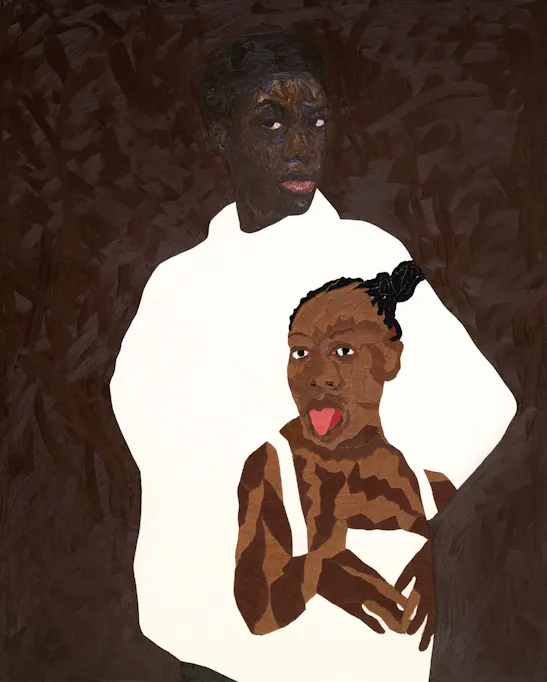
Amoako Boafo. It Doesn’t Have to Always Make Sense
Museo di Palazzo Grimani, Venice
Through his practice, Amoako Boafo (b. 1984) reconsiders the genre of portraiture as a device for affirming identity and presence by manipulating pigment directly with his fingers rather than a brush. Drawing inspiration from the Renaissance atmosphere of Museo di Palazzo Grimani, It Doesn’t Have to Always Make Sense — the artist’s first solo exhibition in Italy — features a series of new and recent works, many of which directly reference the unique architecture and historical context of the site. Installed on the second floor of the palazzo, the works sit in quiet conversation with the Venetian portrait tradition — a tradition that, until now, had little room for figures like Boafo's. It is an encounter that feels both inevitable and long overdue.
Amoako Boafo (né en 1984) fait du portrait un acte d'affirmation – celle de l'identité, de la présence, de l'existence même de ses sujets. Sa technique est immédiate, presque physique : il peint avec ses doigts, laissant dans la matière la trace directe du geste. It Doesn't Have to Always Make Sense, sa première exposition personnelle en Italie, prend place au Museo di Palazzo Grimani, dont l'architecture Renaissance imprègne les œuvres nouvelles et récentes présentées au second étage. Face aux portraits vénitiens qui ont longtemps défini le genre, ceux de Boafo s'imposent avec une évidence tranquille. Une rencontre qui semblait s'être trop fait attendre.
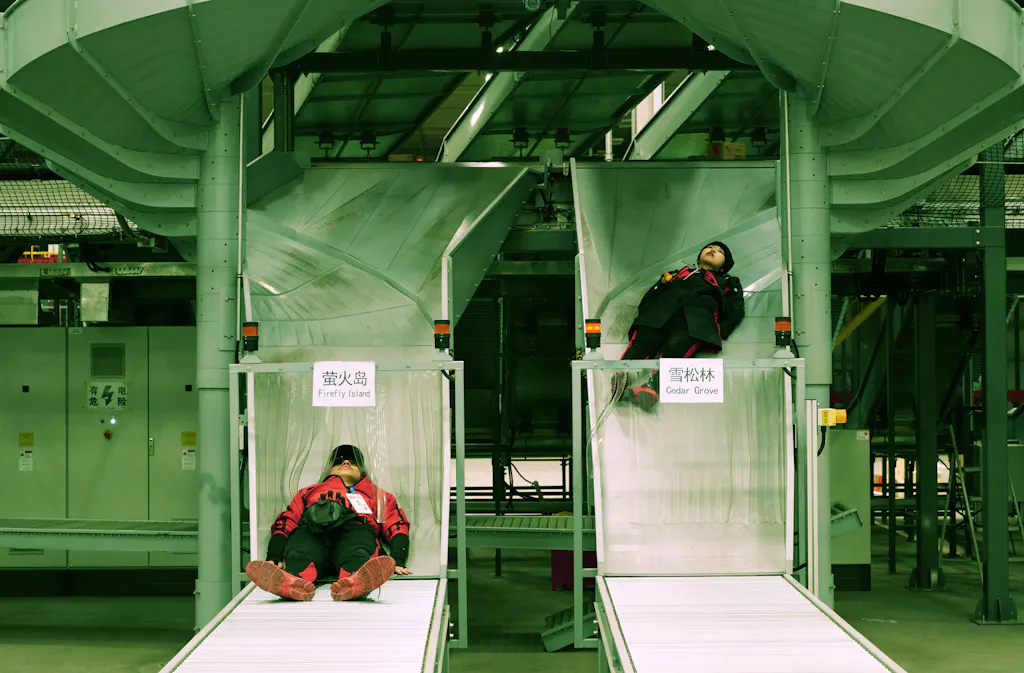
Cao Fei. Testimonies to the Near Future
Kunstmuseum Basel
Few artists have mapped the digital condition as persistently as Cao Fei (b. 1978). For over two decades she has been making art — from video installations and digital simulations to virtual-reality environments — that grapples with the human cost of societal and technological transformation. For Testimonies to the Near Future, her first solo exhibition in Switzerland, the Chinese artist transforms the Kunstmuseum Basel into an immersive city: an accumulation of imposing installations and video works spanning twenty years of practice. Moving between the utopian promises and quiet anxieties of the digital age, the exhibition offers a rare opportunity to encounter the full scope of her vision in a single space.
Rares sont les artistes ayant cartographié la condition numérique avec autant de constance que Cao Fei (née en 1978). Depuis plus de vingt ans, son travail – installations vidéo, simulations numériques, environnements de réalité virtuelle – interroge le coût humain des transformations sociales et technologiques. Pour Testimonies to the Near Future, sa première exposition personnelle en Suisse, l'artiste chinoise transforme le Kunstmuseum Basel en une ville immersive : une accumulation d'installations imposantes et d'œuvres vidéo couvrant vingt ans de pratique. Entre les promesses utopiques et les angoisses sourdes de l'ère numérique, l'exposition offre une occasion rare de saisir l'étendue de sa vision en un seul lieu.
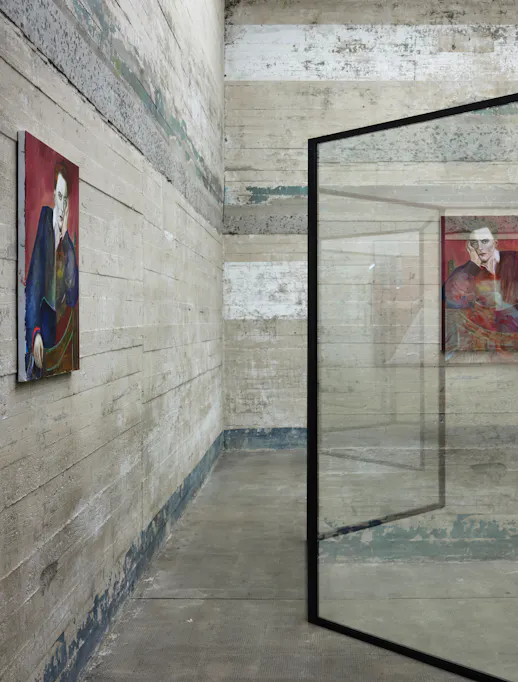
Boros Collection #5
Bunker Berlin
Since 2008, a listed former WWII bunker has served as the exhibition space of the Boros Collection, one of the most distinctive private collections of contemporary art in Europe. Opening as part of Gallery Weekend Berlin, a new, fifth selection from the collection goes on show: 27 contemporary artworks across painting, sculpture, installation, and sound by artists like Klara Lidén, Jeremy Shaw and Adriano Costa, the majority of which were recently acquired. Despite their differences, the works share a common sensibility: a preoccupation with transitional states, unresolved conditions, and the turn from external realities toward inner ones. The exhibition is accessible by 90-minute guided tours only.
Depuis 2008, un ancien bunker de la Seconde Guerre mondiale classé monument historique abrite la Boros Collection, l'une des collections privées d'art contemporain les plus singulières d'Europe. À l'occasion du Gallery Weekend Berlin, une cinquième sélection d'œuvres sera présentée : 27 œuvres réparties entre peinture, sculpture, installation et son, par des artistes tels que Klara Lidén, Jeremy Shaw et Adriano Costa, dont la majorité a été acquise récemment. Malgré leurs différences, ces œuvres partagent une sensibilité commune : une attention portée aux états de transition, aux conditions non résolues, et au glissement des réalités extérieures vers les états intérieurs. La collection n'est accessible qu'en visite guidée de 90 minutes.
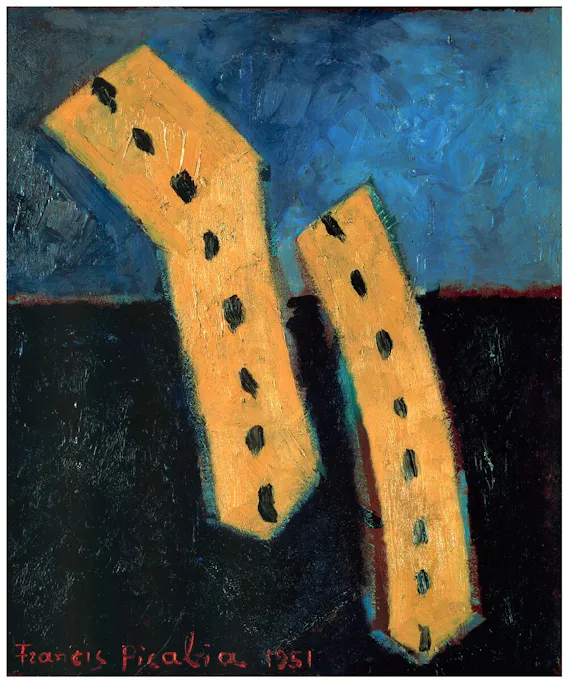
Francis Picabia. Expanding Horizons
Hauser & Wirth, London
The career and worldview of Francis Picabia (1879–1953) were marked by ceaseless experimentation and a stubborn refusal to be categorised, making him one of the most restless and deliberately elusive figures in modern art history. Organised in collaboration with the Comité Picabia, Expanding Horizons covers five decades of the French-Cuban artist’s practice: from early landscapes and Dada provocations to the Transparencies, wartime realist works, radical nudes and the textured abstractions of his final years. Taken together, they confirm his reputation as one of the most ingenious shapeshifters of his generation — an artist for whom reinvention was not a strategy but a compulsion.
Inclassable, insaisissable, perpétuellement en mouvement — Francis Picabia (1879–1953) reste l'une des figures les plus déroutantes de l'art moderne. Organisée en collaboration avec le Comité Picabia, Expanding Horizons traverse cinq décennies de la pratique de cet artiste franco-cubain : des premiers paysages aux provocations Dada, des Transparences aux nus radicaux, jusqu'aux peintures abstraites de ses dernières années. Un parcours qui confirme sa réputation de caméléon le plus ingénieux de sa génération, un artiste pour qui se réinventer relevait moins de la stratégie que de la nécessité profonde.
Helter Skelter. Arthur Jafa and Richard Prince
Fondazione Prada, Venice
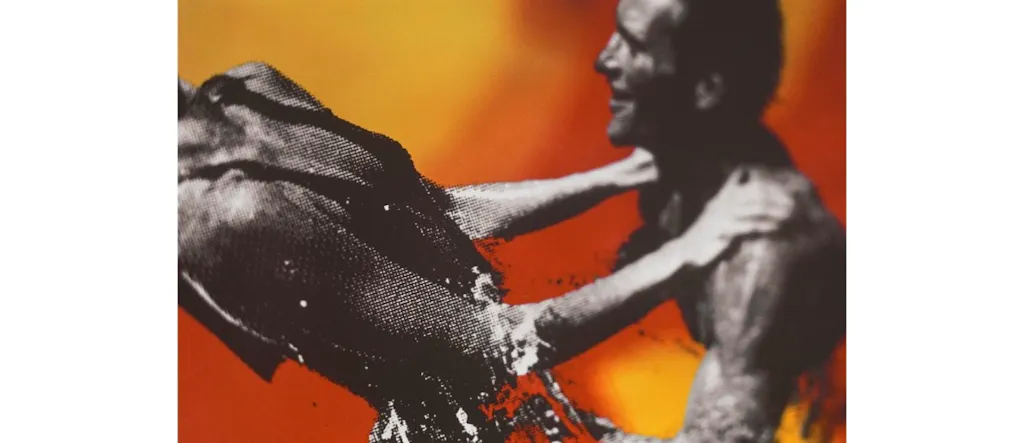
Born a decade apart, Arthur Jafa (b. 1960) and Richard Prince (b. 1949) share an ethos of lawlessness when it comes to the appropriation and manipulation of images. Trafficking heavily in American popular culture, they expose its grit and grift, while embracing many of its myths and perversions. Jafa maps his identity as an African American man onto the culture's fault lines; Prince hovers between a self-conscious critique of white masculinity and a fascination with the underbelly of the American psyche. Helter Skelter brings their obsessions into direct collision, combining works by both artists to illuminate each of their practices and tease out the shared pathologies beneath. The exhibition is accompanied by a collaboratively conceived zine — images exchanged between the artists during the making of the show.
Arthur Jafa (né en 1960) et Richard Prince (né en 1949) ont en commun une même culture du pillage — celle de l'image américaine, de ses mythes et de ses perversions. Jafa y cartographie son identité d'homme noir américain sur les lignes de fracture de cette culture ; Prince y oscille entre une critique lucide de la masculinité blanche et une fascination trouble pour les bas-fonds de la psyché américaine. Helter Skelter fait se percuter leurs obsessions respectives, confrontant leurs œuvres pour mieux révéler les pathologies souterraines qu'ils partagent. L'exposition s'accompagne d'un zine conçu en commun, nourri des images que les deux artistes ont échangées au fil de sa préparation.
Pierre Huyghe
Fondation Beyeler, Riehen
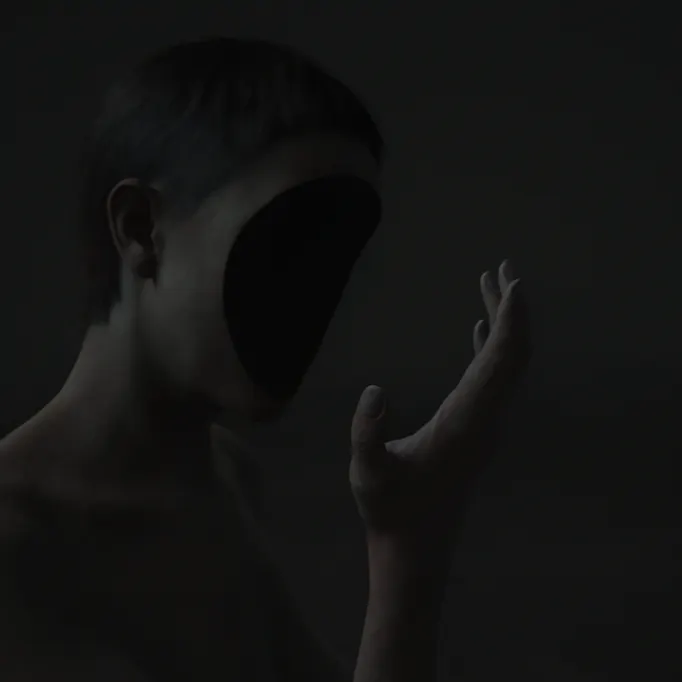
For over two decades, Pierre Huyghe (b. 1962) has been combining cinematic, biological and digital elements into living, dynamic scenarios shaped by time and unpredictability. At the Fondation Beyeler, he transforms the exhibition space into a living, breathing organism — newly created works alongside key pieces from recent years, all bound together by a single pulse. At the heart of the presentation stands Apnea (2026): an artificial respiratory organ, coiled underwater, that breathes in time with the human rhythm, its membrane vibrating with each beat. Air, sounds and subtle vibrations circulate through the walls until they fall out of sync or are interrupted, forming a shared field of breath that permeates the entire exhibition.
Pierre Huyghe (né en 1962) ne fait pas des expositions, il crée des écosystèmes. Depuis plus de vingt ans, ses œuvres, à la croisée du cinéma, du vivant et du numérique, évoluent, se transforment, échappent à tout contrôle. À la Fondation Beyeler, créations récentes et pièces majeures des dernières années coexistent sous l'emprise d'Apnea (2026) : un organe respiratoire artificiel, lové sous l'eau, qui respire au rythme du corps humain. Sons, vibrations et flux d'air traversent les murs, se désynchronisent, s'interrompent, formant un souffle collectif qui imprègne chaque recoin de l'exposition.
Marina Abramović. Transforming Energy
Gallerie dell'Accademia, Venice
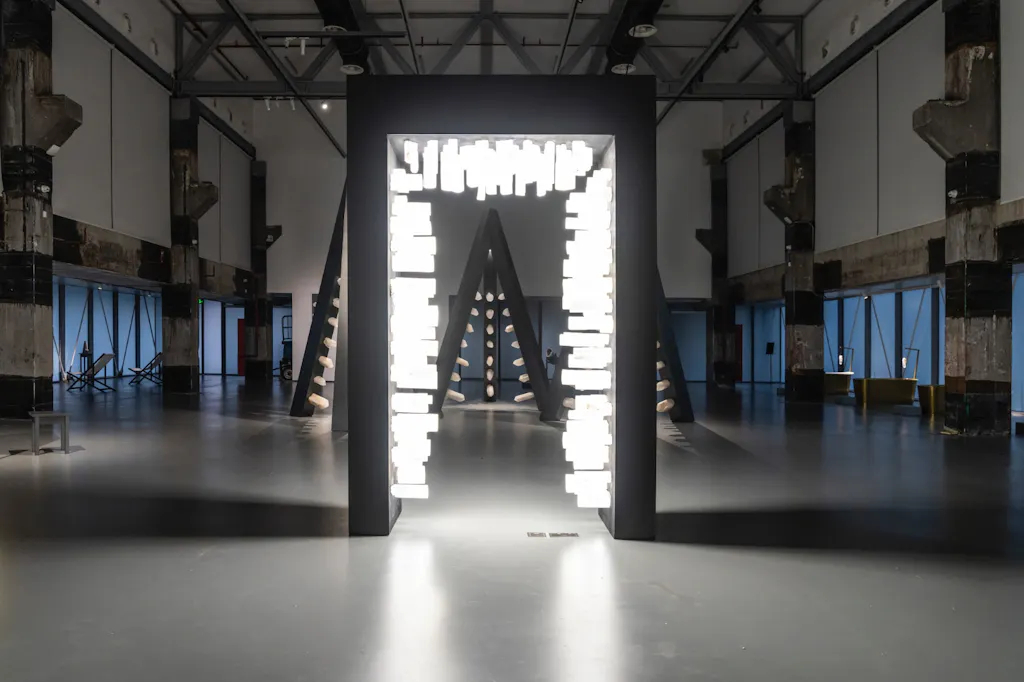
In 2026, coinciding with her 80th birthday, Marina Abramović becomes the first living woman artist to be honoured with a major exhibition at the Gallerie dell'Accademia in Venice. Unfolding across both the museum's permanent collection galleries and its temporary exhibition spaces, Transforming Energy embeds Abramović's pioneering performance practice within the very heart of Venetian patrimony, and in direct dialogue with the Renaissance masterpieces that have shaped the cultural identity of the city. By placing the visitor's own body at the centre, the exhibition invites a durational form of looking: one that is less about passive observation and more about presence, participation, and the possibility of inner change.
En 2026, pour ses 80 ans, Marina Abramović devient la première artiste vivante à faire l'objet d'une exposition majeure aux Gallerie dell'Accademia de Venise. Déployée à la fois dans les salles de la collection permanente et dans les espaces d'exposition temporaire, Transforming Energy ancre sa pratique pionnière de la performance au cœur même du patrimoine vénitien, en dialogue direct avec les chefs-d'œuvre de la Renaissance qui ont forgé l'identité culturelle de la ville. En plaçant le corps du visiteur au centre, l'exposition invite à une forme de regard durational : moins contemplatif que traversé par la présence, la participation, et la possibilité d'une transformation intérieure.
Charlotte Perriand. Living Modernism: Design, Photography, Architecture
Museum der Moderne Salzburg
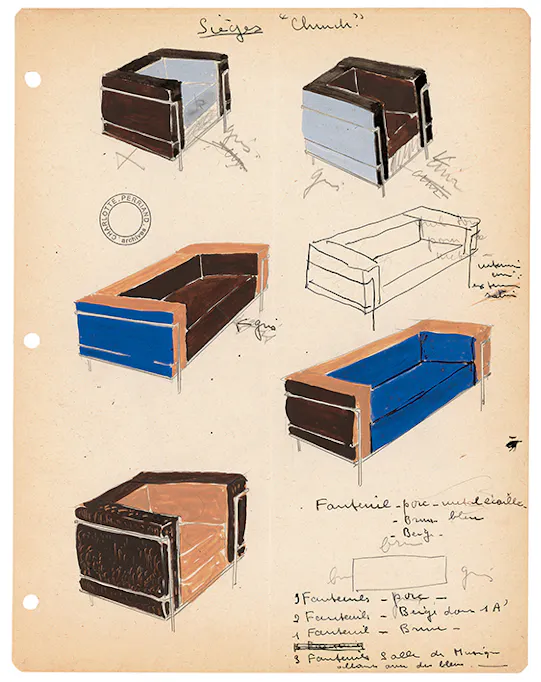
Charlotte Perriand (1903–1999) never designed objects — she designed ways of living. Furniture, architecture and photography were not separate disciplines in her practice but instruments of a single, holistic vision: the creation of environments in which modern life could unfold with dignity and ease. With Living Modernism: Design, Photography, Architecture, the Museum der Moderne Salzburg dedicates the first major retrospective in Austria to the French architect and designer, tracing her practice across five decades and affirming her place as one of the most influential figures in the history of twentieth-century design.
Mobilier, architecture, photographie : pour Charlotte Perriand (1903–1999), ces disciplines n'en formaient qu'une seule, au service d'une vision globale : créer des environnements dans lesquels la vie moderne puisse se déployer avec dignité et légèreté. Ses œuvres n'étaient jamais pensées comme des objets autonomes, mais comme les composantes d'un ensemble plus vaste – une approche qui la place parmi les figures les plus visionnaires du design du XXe siècle. Avec Living Modernism: Design, Photography, Architecture, le Museum der Moderne Salzburg lui consacre la première grande rétrospective en Autriche, retraçant cinq décennies d'une pratique aussi singulière qu'influente.

Hilma af Klint. Paintings for the Temple (1906-1915)
Grand Palais, Paris
Hilma af Klint (1862–1944) led a double artistic life: a figurative practice that conformed to the expectations of her time and, kept entirely secret, a radically avant-garde body of work nourished by theosophy and spiritualism. From 1906, long before Kandinsky or Malevich, she was producing bold compositions in which vivid colours, geometric shapes and organic motifs anticipated the major currents of modern art — work she stipulated should not be shown until twenty years after her death. Paintings for the Temple, af Klint’s first monographic exhibition in France, tells the extraordinary story of an artist who chose to speak to the future rather than her own time.
Hilma af Klint (1862–1944) menait une double vie artistique. En public, une pratique figurative conforme aux attentes de son époque. Dans le secret, une œuvre radicalement avant-gardiste, nourrie de théosophie et de spiritualisme. Dès 1906, bien avant Kandinsky ou Malevitch, elle produisait des compositions audacieuses où couleurs vives, formes géométriques et motifs organiques anticipaient les grands courants de l'art moderne – des œuvres dont elle exigea qu'elles ne soient montrées que vingt ans après sa mort. Paintings for the Temple, sa première exposition monographique en France, raconte l'histoire extraordinaire d'une artiste qui choisit de s'adresser à l'avenir plutôt qu'à son propre temps.