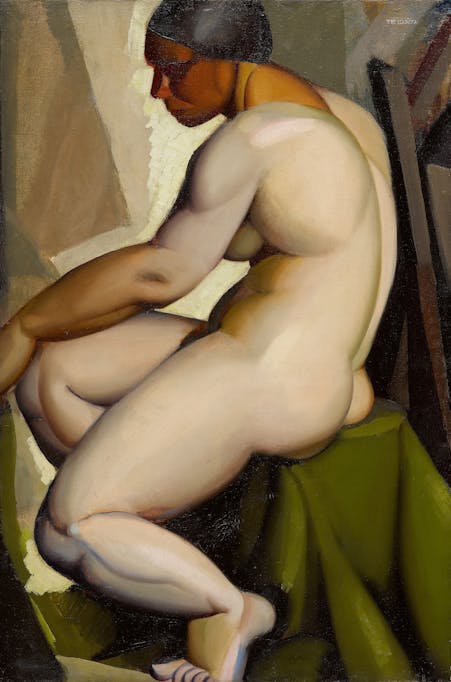
The First Homosexuals. The Birth of New Identities 1869–1939
Kunstmuseum Basel
The exhibition The First Homosexuals: The Birth of New Identities 1869–1939 turns the spotlight on the early visibility of same-sex desire and gender diversity in the arts. Through around eighty paintings, works on paper, sculptures, and photographs, it illuminates how artists from the late 19th and early 20th centuries engaged with evolving ideas of sexuality and gender and how homoerotic themes were expressed through discreet — and sometimes not so discreet — visual codes, both before and after the term homosexual entered the public lexicon in 1869. Far from a simple celebration of visibility, the exhibition explores the complex negotiations around identity formation, showing how language shaped perception and how the arts were central to the emergence of queer identities.
L’exposition The First Homosexuals: The Birth of New Identities 1869–1939 explore comment le désir homosexuel et la diversité des genres ont commencé à se rendre visibles dans les arts. Peintures, dessins, sculptures et photographies, issues d’une quarantaine d’années de création, dévoilent comment, à la fin du 19e et au début du 20e siècle, les artistes ont traduit ces idées naissantes à travers des codes subtils, parfois au contraire très explicites, avant et après l’apparition du mot homosexuel dans le vocabulaire public en 1869. Loin d’une simple célébration de la visibilité, l’exposition met en lumière les délicates négociations autour de la construction des identités et montre comment l’art a façonné les perceptions et accompagné l’émergence des identités queer.
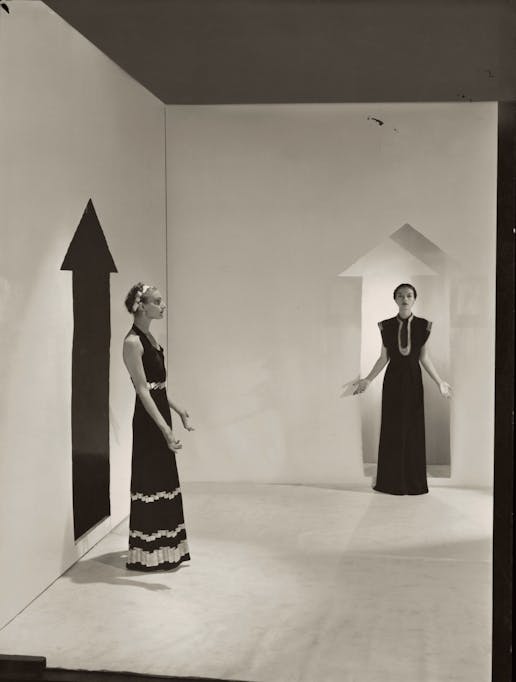
Schiaparelli. Fashion Becomes Art
Victoria & Albert Museum, London
Elsa Schiaparelli (1890–1973) was one of the most radical designers of the 20th century, one who set herself apart by treating fashion as a conceptual medium at a time when others simply saw garments. The first UK exhibition dedicated to Schiaparelli celebrates the innovative designer’s influence, tracing the fashion house’s groundbreaking origins and its evolution under current creative director Daniel Roseberry. At its heart are Schiaparelli’s collaborations with artists — Salvador Dalí, Jean Cocteau and Man Ray — and the iconic creations that emerged from them. Bringing together an extraordinary selection of garments, artworks and archival material, the exhibition reveals the bold vision through which Schiaparelli forever redefined what couture could be.
Elsa Schiaparelli (1890–1973) fut l’une des créatrices les plus audacieuses du 20e siècle, celle qui transforma la mode en un véritable langage conceptuel à une époque où l’on se contentait de créer des vêtements. La première rétrospective consacrée à Schiaparelli au Royaume-Uni célèbre l’influence de cette innovatrice, retrace les origines révolutionnaires de sa maison et son évolution sous la direction artistique de Daniel Roseberry. Au cœur du parcours se trouvent les collaborations de Schiaparelli avec des artistes – Salvador Dalí, Jean Cocteau et Man Ray – ainsi que les créations emblématiques qu’elles ont inspirées. Rassemblant une sélection exceptionnelle de pièces de couture, d’œuvres et de documents d’archives, l’exposition dévoile la vision audacieuse qui a permis à Schiaparelli de redéfinir à jamais ce que pouvait être la haute couture.
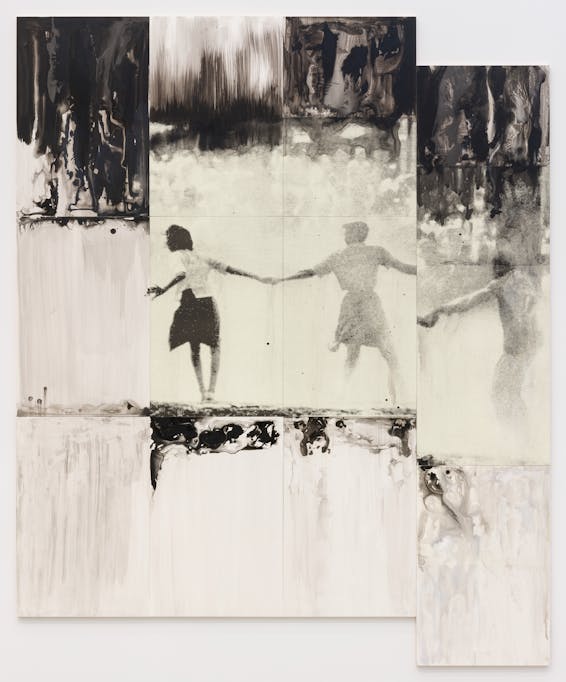
Lorna Simpson. Third Person
Punta della Dogana, Venice
Ever since she first gained recognition in the mid‑1980s, Lorna Simpson (b. 1960 in New York) has been interrogating how meaning is constructed and how narratives are shaped — initially through conceptual photography, and more recently, since the 2010s, through painting. For the first time in Europe on such a scale, Punta della Dogana presents a comprehensive survey of her practice, bringing together around fifty works — paintings, collages, videos, sculptures, and installations — drawn from private collections, international institutions, and the artist’s own archive. The exhibition also debuts several new works created specifically for this occasion, allowing Simpson to extend her ongoing investigations into memory and its erosion, the failures of representation, and the instability of narrative.
Depuis les années 1980, Lorna Simpson (née en 1960 à New York) interroge la manière dont se construisent le sens et les récits, d’abord par la photographie conceptuelle, puis, depuis les années 2010, par la peinture. Pour la première fois en Europe à cette échelle, la Punta della Dogana présente une rétrospective de son travail, rassemblant une cinquantaine d’œuvres – peintures, collages, vidéos, sculptures et installations – issues de collections privées, d’institutions internationales et de l’archive personnelle de l’artiste. L’exposition dévoile également plusieurs œuvres inédites créées spécialement pour l’occasion, prolongeant ses recherches sur la mémoire et son effacement, les limites de la représentation et l’instabilité des récits.
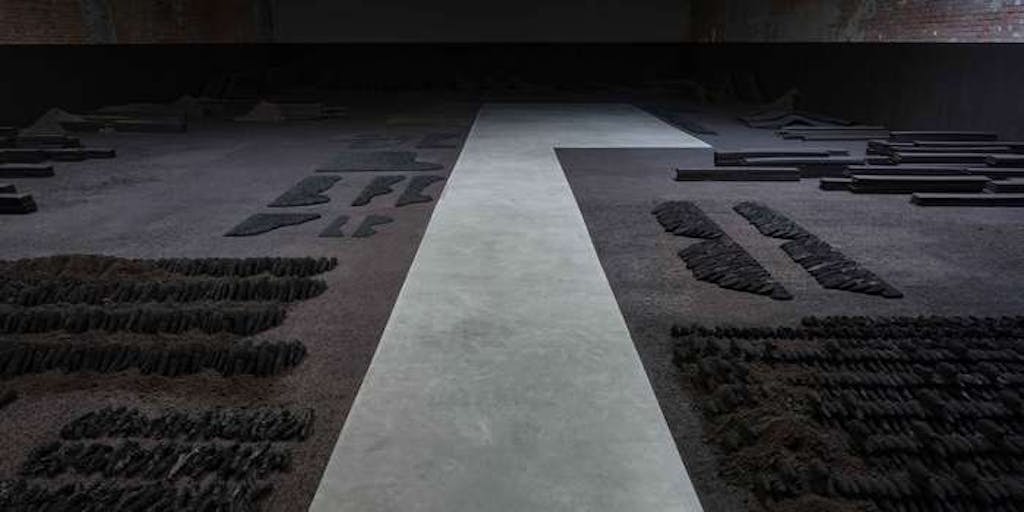
Delcy Morelos. Las Formas de la sombra
LOK by Kunstmuseum St. Gallen
For three decades, Colombian artist Delcy Morelos (b. 1967) has developed a practice across painting, installation, and sculpture which inspires rumination on the interplay between human beings and earth, the human body and materiality. For her exhibition Las Formas de la Sombra, she transforms the Lokremise with an expansive yet ephemeral installation composed of recycled earth, reclaimed wood, and scent essence, creating a work meant to be experienced, not merely viewed. At the heart of the exhibition is a landscape evoking farmland, topography, and traces of archaeology, rendering our estranged relationship with nature sensorially tangible in a quiet yet intense and profoundly political way. Admission is free for the entire duration of the exhibition.
Depuis trois décennies, l’artiste colombienne Delcy Morelos (née en 1967) explore la peinture, la sculpture et l’installation pour sonder les relations entre l’humain et la terre, et entre le corps et la matérialité. Pour son exposition Las Formas de la Sombra, elle transforme la Lokremise en une installation à la fois vaste et éphémère, mêlant terre recyclée, bois récupéré et fragrances naturelles, un environnement pensé pour se vivre pleinement, au-delà du simple regard. Au cœur de l’espace, un paysage évoquant champs cultivés, reliefs et traces archéologiques rend tangible, de manière silencieuse mais intense, notre lien distancié avec la nature, tout en étant porteur d’une dimension politique profondément sensible. L’entrée est libre pendant toute la durée de l’exposition.
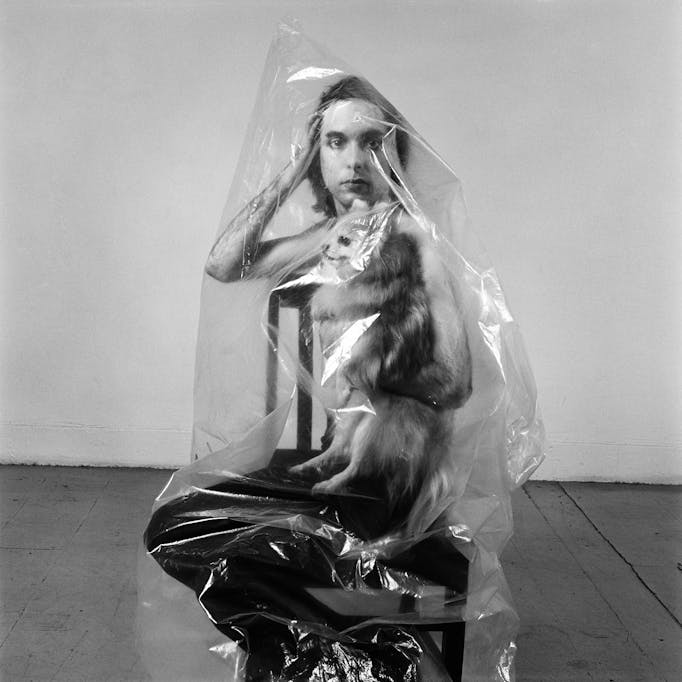
Peter Hujar / Liz Deschenes: Persistence of Vision
Gropiusbau, Berlin
Working in New York City between the Stonewall uprising of 1969 and the onset of the AIDS crisis in the 1980s, Peter Hujar captured a pivotal cultural moment in piercing black-and-white photographs: alongside incisive images of animals, nature and urban ruins, he documented New York’s downtown avant-garde and queer communities, including figures such as Candy Darling, Susan Sontag and David Wojnarowicz. In the exhibition Persistence of Vision, his photographs are interspersed with contemporary works by New York-based artist Liz Deschenes, whose sculptures and non-representational photographic works employ the fundamental properties of the medium — light, chemistry and time — to explore the very possibilities of photography. This first major exhibition in Berlin for both artists is not only a retrospective but rather a conversation across time and practice, highlighting the medium’s ongoing evolution.
Entre le soulèvement de Stonewall en 1969 et les débuts de la crise du sida dans les années 1980, Peter Hujar a saisi un moment culturel déterminant à New York à travers des photographies en noir et blanc d’une intensité saisissante : parallèlement à des images frappantes d’animaux, de paysages et de ruines urbaines, il a documenté l’avant-garde du downtown et les communautés queer de la ville, immortalisant des figures telles que Candy Darling, Susan Sontag ou David Wojnarowicz. L’exposition Persistence of Vision met ses photographies en dialogue avec les œuvres contemporaines de l’artiste new-yorkaise Liz Deschenes, dont les sculptures et les œuvres photographiques abstraites sondent la lumière, la chimie et le temps pour réinventer les possibles de la photographie. Cette première grande exposition berlinoise pour les deux artistes ne se limite pas à une rétrospective ; elle propose une véritable conversation à travers le temps et les pratiques, mettant en lumière l’évolution continue de la photographie.

Clair-Obscur
Bourse de Commerce, Paris
Frank Bowling, Pierre Huyghe, Philippe Parreno, Carol Rama, Laura Lamiel, and many more revealed in an interplay of light and shadow: by using the historic concept of chiaroscuro — the dramatic contrast of light and dark developed in Renaissance and Baroque art — the group show Clair‑obscur serves as a lens to examine how artists today probe the visible and the unseen, reality and its depths. Through around a hundred works by about twenty modern and contemporary artists drawn from François Pinault’s collection, it invites visitors to explore a rich visual and philosophical dialogue between light and shadow — the legacy of chiaroscuro as it resonates in the present day.
Frank Bowling, Pierre Huyghe, Philippe Parreno, Carol Rama, Laura Lamiel, et bien d’autres se révèlent dans un jeu fascinant de lumière et d’ombre. Inspirée du chiaroscuro, ce contraste dramatique entre lumière et ténèbres que la Renaissance et le Baroque ont élevé au rang d’art, l’exposition collective Clair-Obscur explore la manière dont les artistes contemporains sondent le visible et l’invisible, la réalité et ses profondeurs. Réunissant une centaine d’œuvres d’une vingtaine d’artistes modernes et contemporains issues de la collection François Pinault, elle déploie un dialogue visuel et philosophique, à la fois immersif et captivant, qui entraîne le visiteur au cœur de cet univers de lumière et de ténèbres.