Intimate Anatomies. Cathy Josefowitz, Maria Lassnig, Carol Rama
Hauser & Wirth, St. Moritz
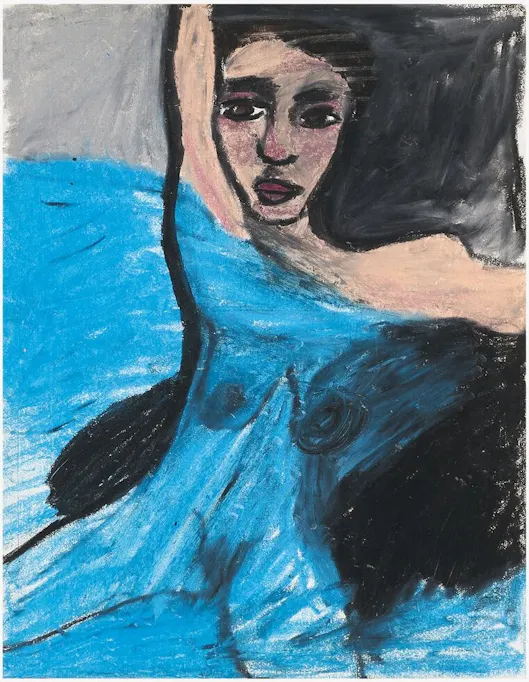
Three women, three methods, one obsession. Intimate Anatomies brings together Cathy Josefowitz (1956–2014), Maria Lassnig (1919–2014) and Carol Rama (1918–2015) for the first time — and the pairing feels less like a curatorial argument than a long-overdue recognition. Each mapped the female body from the inside: not as an image, not as an object, but as the primary site of knowledge. Where Lassnig tracked sensation and consciousness with a precision that still feels almost clinical, Rama moved through desire and rupture, and Josefowitz through a looser, more architectural restlessness of form. Intimate Anatomies holds these three practices in tension, allowing the body — fragmented, amorphous, sometimes jubilant, sometimes strange — to speak on its own terms.
Trois femmes, trois démarches, une seule obsession. Le rapprochement de Cathy Josefowitz (1956–2014), Maria Lassnig (1919–2014) et Carol Rama (1918–2015), réunies pour la première fois, s'impose comme une reconnaissance trop longtemps différée. Toutes trois ont cartographié le corps féminin de l'intérieur, comme seul territoire véritablement connu. Lassnig y traquait la sensation avec une précision presque clinique. Rama y avançait par le désir, la rupture, l'excès. Josefowitz par une inquiétude de la forme, plus libre, plus architecturale. Intimate Anatomies laisse ces trois pratiques coexister sans les réconcilier – et le corps, fragmenté, parfois jubilatoire, parfois inquiétant, finit par parler seul.
En Miroirs
Fonds Bustamante, Arles
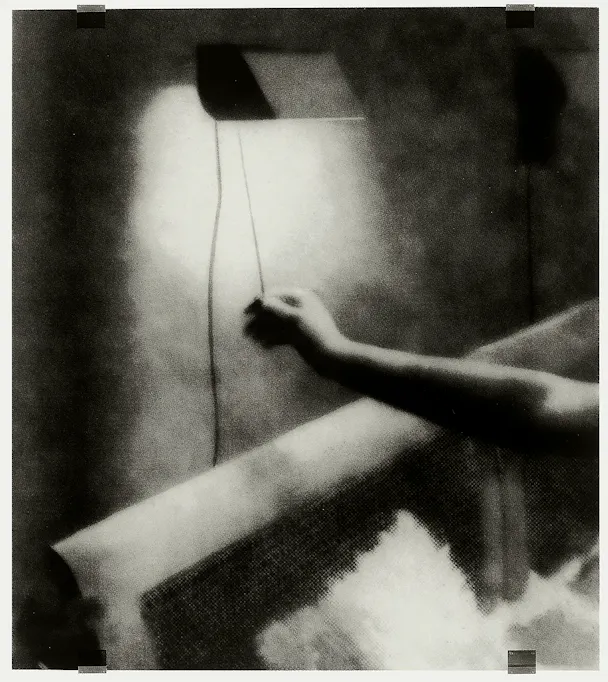
Arles gains a new institution this summer. The Fonds Bustamante opens on 9 July in the former 12th-century Église Sainte-Croix in the Roquette district — restored by Charles Zana in a way that reveals the building's successive lives rather than erasing them — and the inaugural exhibition sets the tone for everything the foundation intends to be. En Miroirs brings together Jean-Marc Bustamante's own work alongside artists he has personally chosen: Cristina Iglesias, Thomas Schütte, Franz West, Rodney Graham, Jan Vercruysse, René Daniëls, among others — painters, photographers and sculptors across generations who have shaped his thinking or share particular affinities with his practice. The result is less a group show than a portrait of an artistic life told through its influences, admirations and creative kinships.
Arles s'enrichit cet été d'une nouvelle institution. Le Fonds Bustamante ouvre le 9 juillet dans l'ancienne Église Sainte-Croix du XIIe siècle, dans le quartier de la Roquette, restaurée par Charles Zana selon une approche qui révèle les strates successives du bâtiment sans les effacer, et l'exposition inaugurale donne le ton de ce que la fondation entend être. En Miroirs réunit les œuvres de Jean-Marc Bustamante et celles d'artistes qu'il a personnellement choisis : Cristina Iglesias, Thomas Schütte, Franz West, Rodney Graham, Jan Vercruysse, René Daniëls, entre autres, peintres, photographes et sculpteurs de différentes générations qui ont nourri sa pensée ou partagent des affinités particulières avec sa pratique. Le résultat tient moins de l'exposition collective que du portrait d'une vie artistique racontée à travers ses influences, ses admirations et ses complicités.
Rashid Johnson / Sheree Hovsepian / Rashid, Sheree and Friends
Château La Coste, Le Puy-Sainte-Réparade
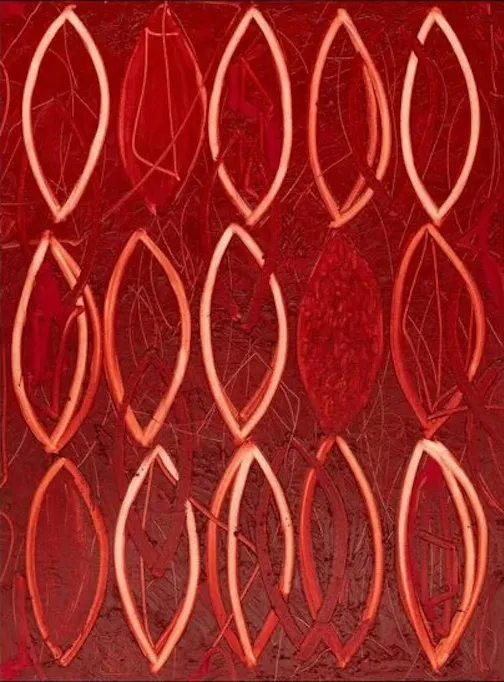
With his retrospective at the Guggenheim freshly closed, Rashid Johnson’s solo show at the Oscar Niemeyer Auditorium arrives with corresponding ambition: paintings, sculptures and new bronzes conceived specifically for the estate, alongside a film that extends his longstanding interest in time, voice and collective experience. In the Renzo Piano Pavilion, Sheree Hovsepian presents new sculptural work developed in direct response to the pavilion's partially subterranean architecture — work that explores fragmentation and absence in a space that already seems to hold its breath. The Galerie Richard Rogers hosts the third show, Rashid, Sheree and Friends, a group exhibition of over sixteen artists drawn from the couple's close circle. Together the three shows form something rarer than a survey: a portrait of two artists, their practice, and the world they have built around them.
Sa rétrospective au Guggenheim à peine refermée, le solo show de Rashid Johnson à l'Auditorium Oscar Niemeyer semble à la hauteur de ce moment : peintures, sculptures et bronzes conçus spécifiquement pour le domaine, ainsi qu'un film qui prolonge son intérêt de longue date pour le temps, la voix et l'expérience collective. Dans le Pavillon Renzo Piano, Sheree Hovsepian présente de nouvelles sculptures développées en dialogue direct avec l'architecture partiellement souterraine du pavillon — des œuvres qui explorent la fragmentation et l'absence dans un espace qui semble déjà retenir son souffle. La Galerie Richard Rogers accueille la troisième exposition, Rashid, Sheree and Friends, une exposition collective réunissant plus de seize artistes issus du cercle proche du couple. Ensemble, les trois expositions forment quelque chose de plus rare qu'une rétrospective : le portrait de deux artistes, de leur pratique, et du monde qu'ils ont construit autour d'eux.
Vilhelm Hammershøi. The Eye That Listens
Kunsthaus Zürich
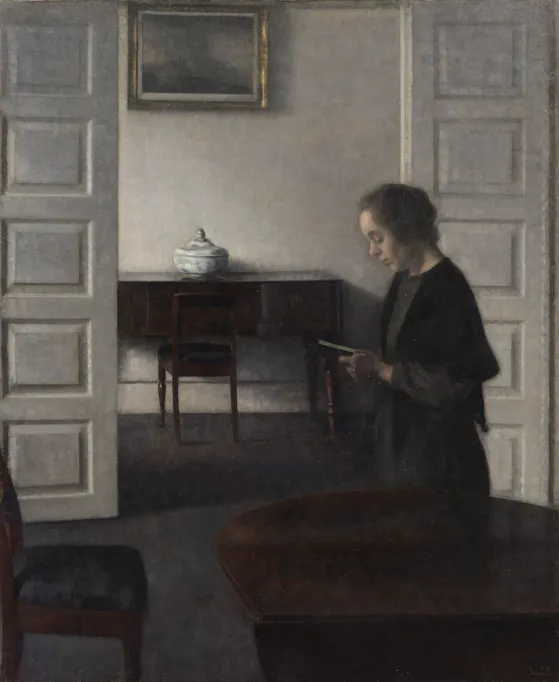
Vilhelm Hammershøi (1864–1916) painted the same things, over and over: empty rooms, closed doors, windows admitting pale northern light, his wife Ida seen from behind. What should feel like repetition feels instead like devotion — to perception, to atmosphere, to the barely-there drama of a room waiting for something to happen. The Kunsthaus Zürich presents the first comprehensive retrospective in Switzerland dedicated to the Danish painter, expanding beyond the iconic interiors to include portraits, cityscapes and landscapes and placing his work in dialogue with artists who share his instinct for suspended stillness. The company he keeps here — Menzel, Borremans, and others — confirms what the rooms always suggested: that Hammershøi belongs to no movement, only to a certain quality of looking.
Vilhelm Hammershøi (1864–1916) a peint les mêmes choses, encore et encore : des pièces vides, des portes closes, des fenêtres laissant entrer une lumière nordique et pâle, sa femme Ida vue de dos. Ce qui devrait sembler répétitif tient davantage de la dévotion, à la perception, à l'atmosphère, au drame imperceptible d'une pièce qui attend que quelque chose se passe. Le Kunsthaus Zürich présente la première rétrospective complète en Suisse consacrée au peintre danois, allant au-delà des intérieurs emblématiques pour inclure portraits, paysages urbains et paysages, et mettant son œuvre en dialogue avec des artistes qui partagent son instinct pour l'immobilité suspendue. La compagnie qu'il fréquente ici, Menzel, Borremans, entre autres, confirme ce que les pièces ont toujours laissé entendre : que Hammershøi n'appartient à aucun mouvement, seulement à une certaine qualité du regard.
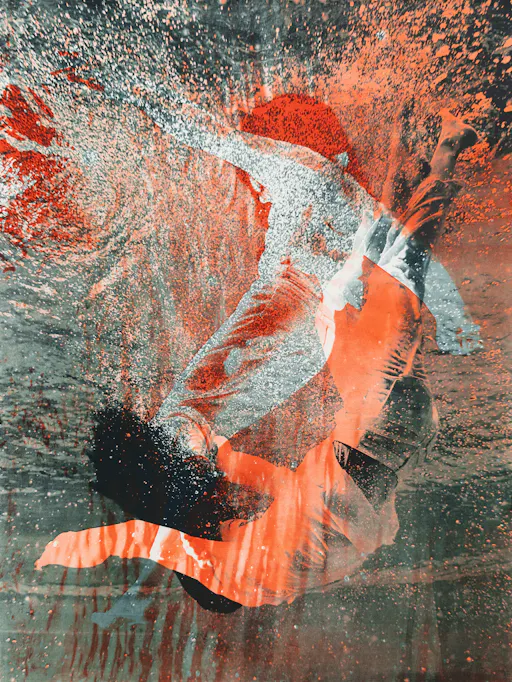
Shirana Shahbazi. All at Once
Kunstmuseum Luzern
Over three decades, Shirana Shahbazi (b. 1974) has developed a practice that moves fluidly across analogue techniques, silkscreen, lithography and large-scale spatial installation — always beginning with the camera, never staying there. Her subject, across all of it, is the experience of living simultaneously in multiple realities: cultural, spatial, emotional. At the Kunstmuseum Luzern, she fills Jean Nouvel's white cube with expansive new installations, many never previously shown, in dialogue with Israeli artist Li Tavor and with the geometric mirror structures of Iranian artist Monir Shahroudy Farmanfarmaian. The result is less an exhibition than an environment — one that asks not what images represent, but what they do to the people standing inside them.
Depuis plus de trente ans, Shirana Shahbazi (née en 1974) développe une pratique qui circule librement entre techniques analogiques, sérigraphie, lithographie et installation spatiale à grande échelle, en partant toujours de la photographie sans jamais s'y arrêter. Son sujet, à travers tout cela, c'est l'expérience de vivre simultanément dans plusieurs réalités : culturelles, spatiales, émotionnelles. Au Kunstmuseum Luzern, elle investit le white cube de Jean Nouvel avec de vastes installations, dont beaucoup n'ont jamais été montrées, en dialogue avec l'artiste israélienne Li Tavor et avec les structures géométriques en miroir de l'Iranienne Monir Shahroudy Farmanfarmaian. Le résultat tient moins de l'exposition que d'un environnement, qui ne demande pas ce que les images représentent, mais ce qu'elles font aux personnes qui se tiennent à l'intérieur.
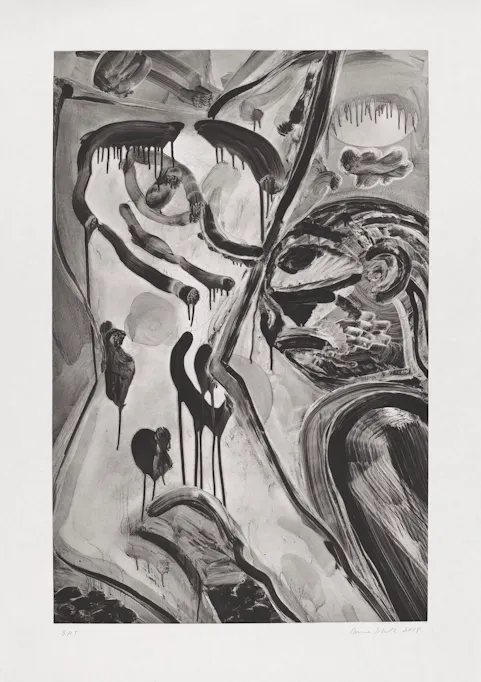
Dana Schutz. Trouble and Appearance
Pinakothek der Moderne, Munich
Dana Schutz (b. 1976) is known for paintings that operate like fever dreams: densely composed, chromatically unhinged, full of figures caught in impossible situations that somehow feel entirely plausible as descriptions of the present. Trouble and Appearance showcases her signature canvases alongside something less expected: a body of new work in charcoal, wall-scale drawings of up to six metres that deliberately invoke the murals of the American Abstract Expressionists, having their world premiere in Munich. The colour is gone; what remains is line, mass, and a darkness that turns out to suit her just as well. Her lesser-known monotypes — large-scale, quietly unsettling — make the same case: the unease was always in the line, not the colour.
Dana Schutz (née en 1976) est connue pour des peintures qui tiennent du cauchemar éveillé : compositions denses, couleurs hallucinées, personnages pris dans des situations impossibles qui sonnent pourtant juste comme autant de portraits du monde contemporain. Trouble and Appearance présente ces toiles aux côtés de quelque chose de moins attendu, une série de nouvelles œuvres au fusain, des dessins muraux pouvant atteindre six mètres, qui convoquent délibérément les murals des expressionnistes abstraits américains et font leur première mondiale à Munich. La couleur a disparu. Ce qui reste, c'est le trait, la masse, et une obscurité qui lui va finalement très bien. Ses monotypes – moins connus, grand format, d'un inquiétant discret – plaident dans le même sens, le malaise était toujours dans le trait, pas dans la couleur.
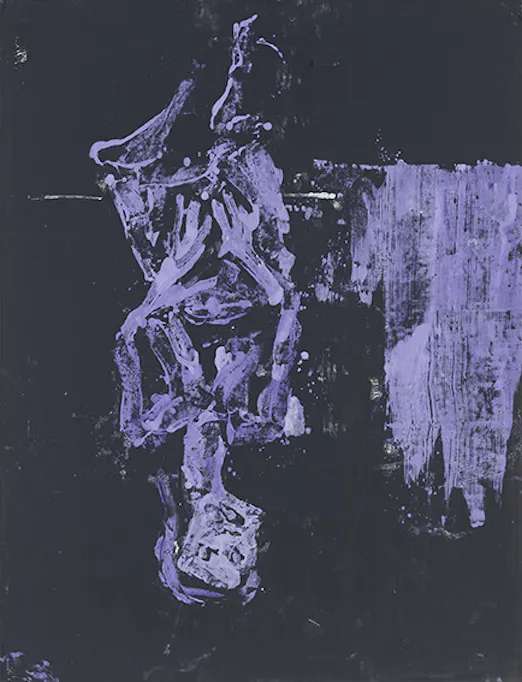
Baselitz Manifestos / Baselitz Now
Museum der Moderne Salzburg
Georg Baselitz died on 30 April 2026, and the Museum der Moderne Salzburg's double exhibition — split across its two venues — now carries a weight its curators could not have anticipated. What was conceived as a survey of a living artist has become something else: an arc, a reckoning. The Rupertinum holds the beginning: early graphic works organised around the four manifestos Baselitz wrote in the 1960s, when he was an expelled East German art student forcing figuration back into a world that had decided on abstraction. The Mönchsberg holds the end: monumental late paintings, some bearing the visible tracks of the wheelchair he worked from, portraits that stare mortality in the face without flinching. Few careers in postwar art have held this kind of consistency of nerve. Seen together, across two buildings in the city where Baselitz spent his final years, the full measure of that becomes impossible to ignore.
Georg Baselitz est mort le 30 avril 2026. La double exposition que lui consacre le Museum der Moderne Salzburg prend dès lors une tout autre dimension. Ce qui devait célébrer l'œuvre d'un vivant est devenu une affaire plus grave : celle d'une vie entière, vue dans son étendue. Au Rupertinum, les débuts : œuvres graphiques des années 1960, structurées autour des quatre manifestes d'un jeune étudiant expulsé d'une école d'art est-allemande, qui s'obstinait à défendre la figuration contre la marée montante de l'abstraction. Au Mönchsberg, la fin : grandes toiles tardives dont certaines portent les sillons du fauteuil roulant avec lequel il peignait encore, portraits qui regardent la mort sans détourner les yeux. Ce que les deux bâtiments donnent à voir, ensemble, c'est la durée, une exigence qui n'a pas fléchi. Dans la ville où Baselitz a choisi de finir ses jours, l'œuvre se referme, et s'impose.
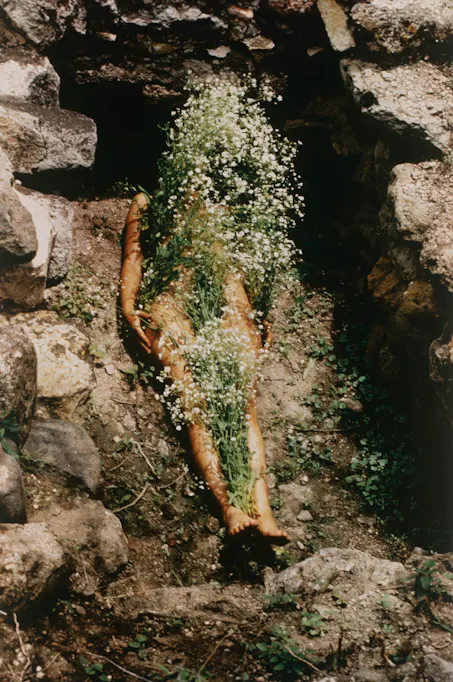
Ana Mendieta
Tate Modern, London
Ana Mendieta (1948–1985) made work about the body by returning it to the earth. Her Silueta Series — outlines of her own form pressed into mud, traced in flowers, burned into grass, submerged in water — are among the most arresting images in late twentieth-century art: at once tender and violent, ephemeral and indelible. Displaced from Cuba at twelve as part of Operation Peter Pan, she spent her career asking where a body belongs when it has been severed from its origins. The answer, again and again, was the landscape itself. This major retrospective — over 150 works, including newly remastered films, rarely seen early paintings and late sculptures, many never shown in the UK before — is the first in-depth presentation of her practice here in over a decade.
Ana Mendieta (1948–1985) parlait du corps en le rendant à la terre. Sa série des Siluetas, silhouettes de son propre corps imprimées dans la boue, tracées en fleurs, brûlées dans l'herbe, immergées dans l'eau, comptent parmi les images les plus saisissantes de l'art de la fin du 20e siècle : à la fois tendres et violentes, éphémères et indélébiles. Expulsée de Cuba à douze ans dans le cadre de l'opération Peter Pan, elle a passé sa carrière à demander où appartient un corps quand il a été arraché à ses origines. La réponse, encore et encore, était le paysage lui-même. Cette grande rétrospective, plus de 150 œuvres dont des films nouvellement remasterisés, des peintures de jeunesse rarement montrées et des sculptures tardives pour beaucoup inédites au Royaume-Uni, est la première présentation approfondie de son œuvre ici depuis plus d'une décennie.
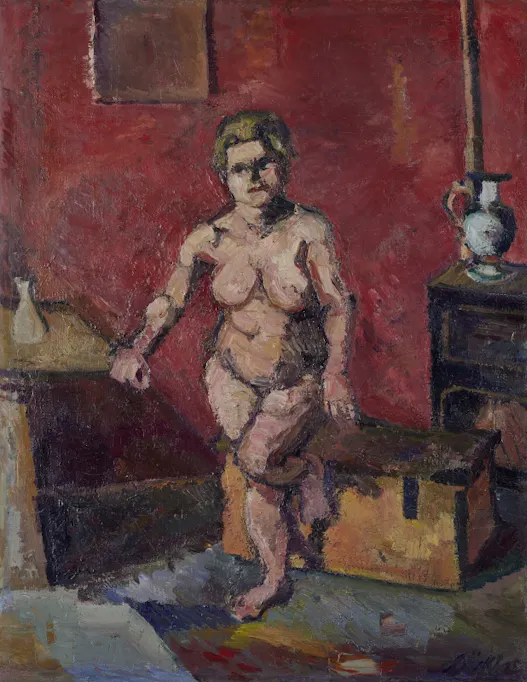
Herbert Boeckl and Hans Josephsohn. Figural Archetypes
Leopold Museum, Vienna
Two artists who never met, brought together by what they refused: Herbert Boeckl (1894–1966) and Hans Josephsohn (1920–2012) both resisted the pull of abstraction at the moment it dominated postwar art, returning again and again to the human figure as the only subject that mattered. Boeckl through paint — raw, Cézanne-inflected, expressionist in its intensity. Josephsohn through plaster, worked with his bare hands, fingermarks embedded in the surface, then cast in bronze: dense, compressed figures that in their late phase barely allude to the body at all, becoming something closer to geological matter, to the thing that survived. The Leopold Museum's dialogue between these two positions — formally unexpected, historically resonant — is one of the quieter revelations of the summer.
Deux artistes qui ne se sont jamais rencontrés, réunis par ce qu'ils ont refusé : Herbert Boeckl (1894–1966) et Hans Josephsohn (1920–2012) ont tous deux résisté à l'attrait de l'abstraction au moment où elle dominait l'art d'après-guerre, revenant sans cesse à la figure humaine comme seul sujet qui vaille. Boeckl par la peinture, brute, marquée par Cézanne, d'une intensité expressionniste. Josephsohn par le plâtre travaillé à mains nues, les empreintes de doigts incrustées dans la surface, puis coulé en bronze : des figures denses, comprimées, qui dans leur phase tardive évoquent à peine le corps, se rapprochant davantage de la matière géologique, de la chose qui a survécu. Le dialogue que propose le Leopold Museum entre ces deux positions, formellement inattendu, historiquement chargé, est l'une des révélations les plus discrètes de l'été.