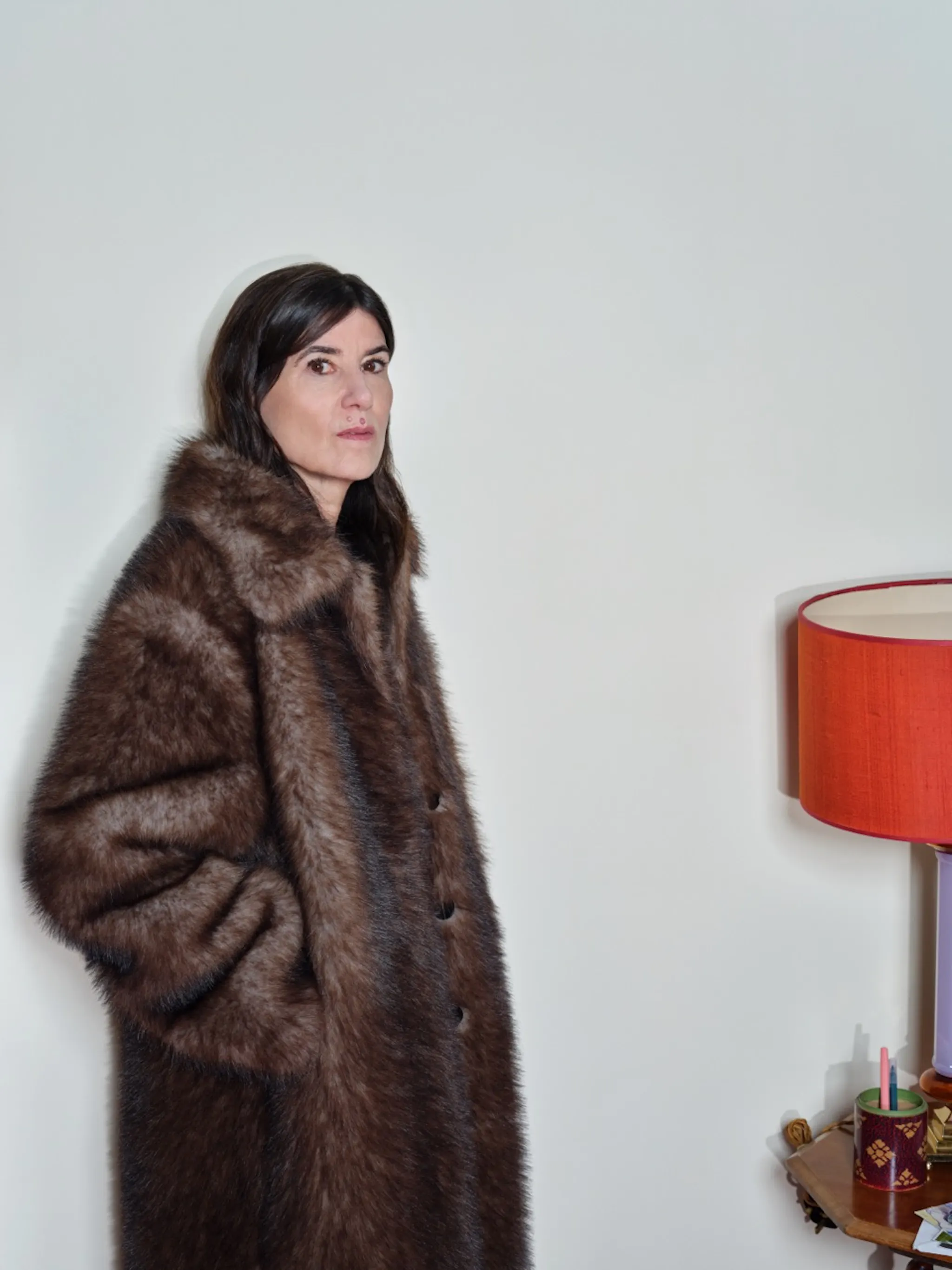

Bella Freud has spent nearly four decades proving that clothes can speak. Trained under Vivienne Westwood and shaped by the twin legacies of her father Lucian Freud's painterly eye and her great-grandfather Sigmund's preoccupation with the unconscious, she launched her eponymous label in 1990. Her slogan knitwear has since become something of a cultural shorthand — worn by everyone from Kate Moss to Zadie Smith — but talk to Freud herself, and it becomes clear the real subject was never just clothing. It is what we are really saying when we use no words at all.
You are part of Zalando's campaign short film «Inner Voice» for Autumn/Winter 2026, which is all about the all-too-familiar struggle of getting dressed. Why do you think What do I wear? is such a common question people ask themselves?
BF I think it is the wobble moment of self-doubt: who am I? Who am I for this occasion? There can be such a crisis at that moment, and clothes can resolve it. Clothes are your ally. It was my first time working with Zalando, and I am impressed by the imaginativeness of their campaigns. It was fantastic to work with critically acclaimed film director Melina Matsoukas and see how she got all the shots.
What is the best style advice you have ever received?
BF Don't hide, but maybe I gave that to myself. I have had an inclination to err on the side of not attracting attention. Now I think, if in doubt, do it. It is such a privilege to be able to dress up and wear great clothes, so I am doing it more and more.
What has fashion taught you about confidence and self-expression?
BF It has taught me there is no retirement age, there are no frontiers, only horizons. The power of a good outfit is inestimable; it can make you more intelligent because it frees you from self-consciousness. Fashion is a good tool for those of us who are more introverted. We can give clues about our nuanced personality, rather than just seem withdrawn or aloof. You can be in the foreground by being attentive to the background and the architecture of an idea. No one can see you, yet you have created visibility.
Seit fast vier Jahrzehnten beweist Bella Freud, dass Kleidung sprechen kann. Den Blick fürs Handwerk hat sie von ihrem Vater, dem Maler Lucian Freud, das Gespür für das Unausgesprochene von ihrem Urgrossvater Sigmund, die Sprache der Mode lernte sie von Vivienne Westwood. Die Slogan-Strickwaren ihres 1990 gegründeten Labels sind längst zu einer Art kulturellem Code geworden – getragen von allen, von Kate Moss bis Zadie Smith. Doch wer mit Freud selbst spricht, merkt schnell: Es geht ihr nie nur um das Anziehen. Sondern darum, was wir sagen, auch wenn wir komplett auf Worte verzichten.
Du bist Teil des Zalando-Kampagnen-Kurzfilms «Inner Voice» für Herbst/Winter 2026, in dem es um die allzu vertraute Herausforderung des täglichen Anziehens geht. Warum, glaubst du, tun sich Menschen so oft so schwer damit?
BF Ich glaube, es sind diese Momente des Selbstzweifels: Wer bin ich? Wer bin ich für diesen spezifischen Anlass? Das sind Momente, fast wie kleine Lebenskrisen – aber eben auch Momente, in denen Mode eine Verbündete sein kann. Es war das erste Mal, dass ich mit Zalando zusammengearbeitet habe, und die Fantasie ihrer Kampagnen hat mich beeindruckt. Es war grossartig, mit der renommierten Filmregisseurin Melina Matsoukas zusammenzuarbeiten und zu sehen, wie sie die Idee visuell einfängt.
Was ist der beste Stylingtipp, den du je bekommen hast?
BF Verstecke dich nicht – aber vielleicht habe ich mir den selbst gegeben. Ich neigte lange dazu, nicht auffallen zu wollen. Heute denke ich: Im Zweifel einfach machen. Es ist ein Privileg, tolle Kleidung tragen zu können, und genau das tue ich immer öfter.
Was hat Mode dich über Selbstbewusstsein und Selbstausdruck gelehrt?
BF Sie hat mich gelehrt, dass es kein Alter gibt, keine Grenzen, nur Horizonte. Die Kraft eines guten Outfits ist immens – es kann einen klüger wirken lassen, weil es einen von der eigenen Befangenheit befreit. Für introvertiertere Menschen wie mich ist Mode ein wunderbares Werkzeug. Man kann die eigene vielschichtige Persönlichkeit zum Ausdruck bringen, anstatt einfach nur zurückhaltend oder distanziert zu wirken. Man kann im Vordergrund stehen, indem man dem Hintergrund Aufmerksamkeit schenkt – der Architektur einer Idee. Niemand sieht einen wirklich, und doch hat man Sichtbarkeit geschaffen.
Fashion taught me there is no retirement age, there are no frontiers, only horizons.
Do you dress for comfort, confidence or wowing the crowd?
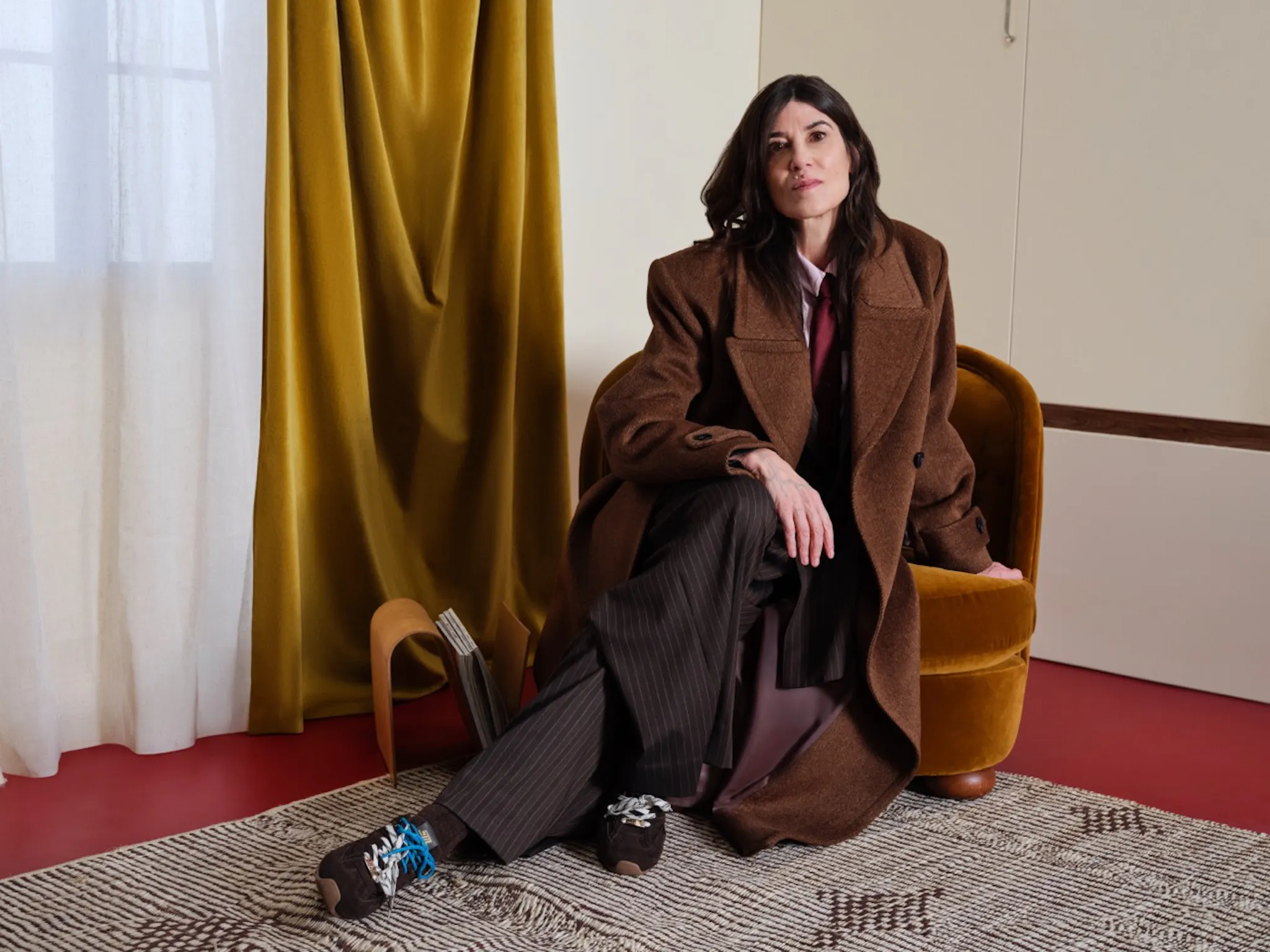
BF I remember Vivienne Westwood saying something like comfort is overrated. I think what she was suggesting is that if you start with comfort, you will never experiment with what could make you feel amazing and give you courage. I think dressing for comfort can trap you in a boring place; it should be the last detail. It is good to represent yourself with clothes so that people recognise you for your qualities through what you wear. Identity is everything; that is what I am going for.
As a designer, where do you find inspiration when you feel creatively stuck?
BF I go back to the places I always find interesting: punk rock, Anita Pallenberg, David Bowie, cartoons from the 60's and 70's. But most of all it's reading — I find the imagery that comes from reading is more three-dimensional than looking at photographs or paintings. The more I have to feel it as opposed to see it, the more it directs me to something new.
How would you describe your style?
BF I came up with something in the 90s which I call upmarket irreverence, I stand by that.
Let's close with something random: What is one item your friends would expect you to buy and one item they wouldn't expect?
BF My friends know about my passion for shoes. I do like a beautiful frying pan; that might come as a surprise
Kleidest du dich für Komfort, für Selbstbewusstsein oder um andere zu beeindrucken?
BF Ich erinnere mich, dass Vivienne Westwood einmal meinte, Komfort sei überbewertet. Ich glaube, sie wollte damit sagen: Wer immer nur auf Nummer sicher geht, findet nie den Look, der einen wirklich selbstbewusst macht. Outfits, die nur auf Bequemlichkeit ausgerichtet sind, wirken schnell beliebig – Komfort sollte am Ende stehen, nicht am Anfang. Es ist schön, sich selbst durch Kleidung darzustellen, sodass Menschen einen an den eigenen Qualitäten erkennen. Identität ist alles – darum geht es mir.
Wo findest du Inspiration, wenn du dich kreativ blockiert fühlst?
BF Wo ich sie schon immer fand: Punkrock, Anita Pallenberg, David Bowie, Cartoons aus den 1960er- und 1970er-Jahren. Aber vor allem ist es das Lesen: Die Bilder, die dabei in meinem Kopf entstehen, wirken auf mich dreidimensionaler als Fotografien oder Gemälde. Je mehr ich etwas spüre statt nur sehe, desto eher führt es mich zu etwas Neuem.
Wie würdest du deinen Stil beschreiben?
BF In den 1990er-Jahren habe ich ihn als elegante Unbekümmertheit beschrieben. Dabei bleibe ich.
Und zum Schluss: Was würden deine Freunde erwarten, dass du kaufst, und was würde sie überraschen?
BF Meine Freunde wissen um meine Leidenschaft für Schuhe. Aber ich mag auch eine schöne Bratpfanne – das hat wohl kaum einer kommen sehen.