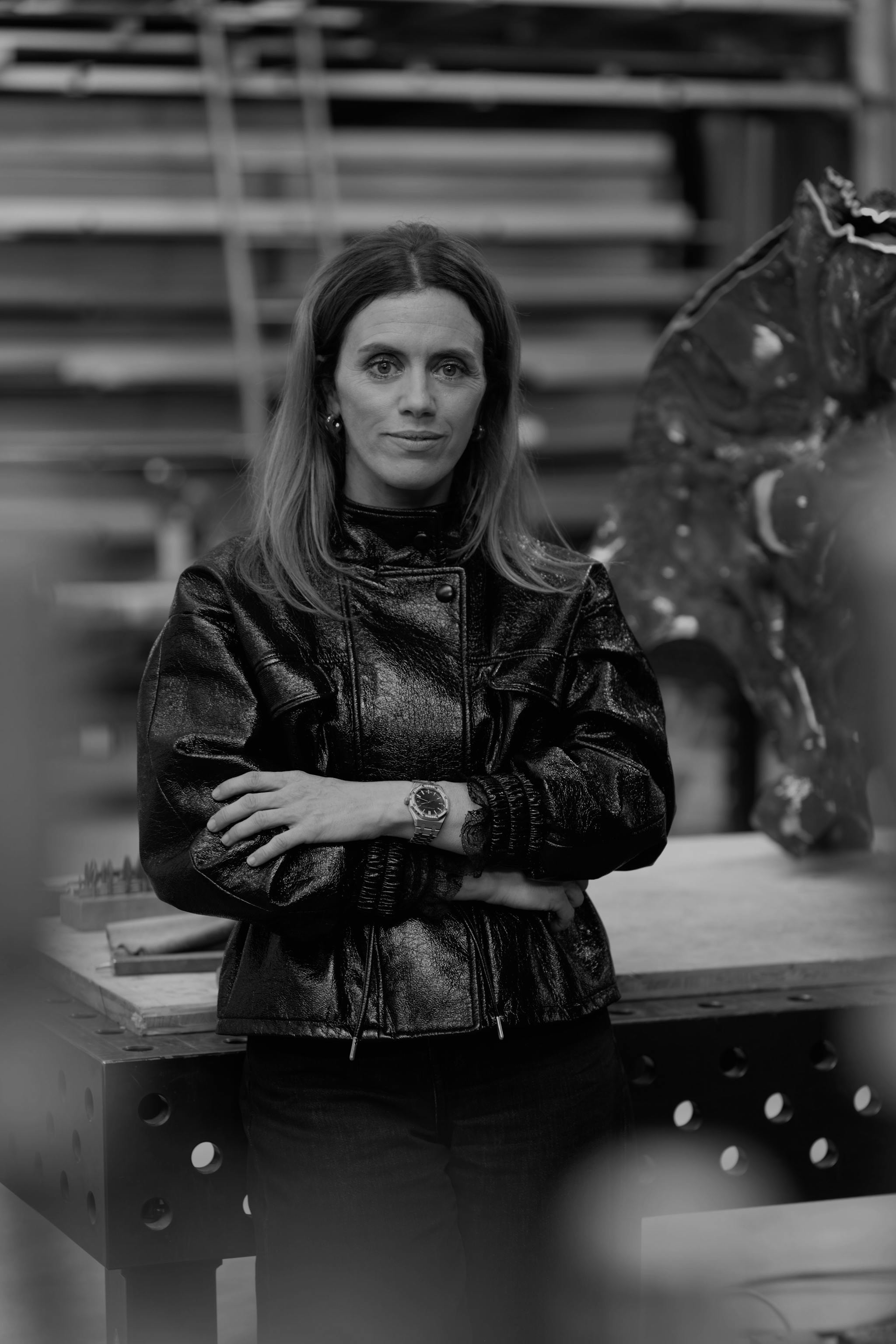
KM So tell me about it, the moment you fell in love with art.
AT My interest in art began in childhood, when I first came across a book of antique Greek sculptures in my parents’ library. I was struck by their beauty and by the realisation that artists could create something so enduringly powerful. At that time my fascination with art was closely tied to aesthetics and intellect. As I grew older, however, I realised that the practices of my contemporaries were no longer rooted primarily in form but in concepts and processes, the everyday artistic practice itself — which led me to become a curator rather than an art historian.
KM How so?
AT Art historians tend to focus on the past more so than the present or future. I wanted to connect with artists of my own generation, to observe how they work, and to see how their exhibitions spark dialogue — with curators and, ultimately, with an audience. One of the key turning points in contemporary art was the recognition that artistic practice goes beyond the object itself, embracing the process of creation and the mindset that guides it. Even today, I find myself trying to reconcile these approaches — research, practice, and the object — and to understand how, in their interaction with audiences, these different elements come back together.
KM Alors, quel a été le moment où vous êtes tombé amoureux de l’art ?
AT Mon intérêt pour l’art remonte à l’enfance : un jour, dans la bibliothèque de mes parents, je suis tombé sur un livre consacré aux sculptures grecques antiques. Leur beauté m’a bouleversé, tout comme la découverte que des artistes pouvaient créer quelque chose d’une force appelée à durer. Au départ, ma fascination relevait autant de l’esthétique que de l’intellect. Puis, en grandissant, j’ai compris que les pratiques de mes contemporains ne se fondaient plus d’abord sur la forme, mais sur les concepts, les processus et l’acte artistique lui-même – une prise de conscience qui m’a naturellement conduit vers le commissariat d’exposition plutôt que vers l’histoire de l’art.
KM En quel sens ?
AT Les historiens de l’art se tournent souvent davantage vers le passé que vers le présent ou l’avenir. Pour ma part, je voulais entrer en contact avec des artistes de ma génération, observer leur manière de travailler et comprendre comment leurs expositions génèrent du dialogue – avec les commissaires et, in fine, avec le public. L’un des tournants majeurs de l’art contemporain a été la prise de conscience que la pratique artistique dépasse l’objet lui-même, qu’elle englobe le processus de création et l’état d’esprit qui le guide. Aujourd’hui encore, je cherche à concilier ces différentes approches et à comprendre comment, à travers l’interaction avec le public, ces éléments se recomposent.
As a child, my fascination with art was closely tied to aesthetics and intellect. As I grew older, however, I realised that the practices of my contemporaries were no longer rooted primarily in form but in concepts and processes, the everyday artistic practice itself.
For almost six years now, Audrey has been part of the in-house curatorial team of Audemars Piguet Contemporary, the watch brand’s dedicated art programme that commissions international artists to create works across a variety of scales and media. Together with her co-curator, Denis Pernet, she accompanies each project from inception to exhibition, while fostering collaborations with cultural institutions around the world to bring these works to a global audience. Since the initiative launched in 2012, Audemars Piguet Contemporary has commissioned 27 international creators, among them Adrián Villar Rojas, Meriem Bennani, Aleksandra Domanović, Cao Fei, Petrit Halilaj & Álvaro Urbano, Ryoji Ikeda, Yu Ji, Alexandra Pirici, Sallisa Rosa, Tomás Saraceno, Jana Winderen and Sun Xun.
KM The position at Audemars Piguet Contemporary is your first at an in-house brand initiative. How does it differ from a curatorial role in a traditional institution?
AT The research process is the same, as is the prospective work, and we engage in the same conversations with the wider art ecosystem — directors, independent curators, and artists. What sets. At Audemars Piguet Contemporary, our focus is the ongoing relationships we cultivate with artists. We often work with an artist across multiple exhibitions, which is a unique experience and speaks to the depth of the relationships we create. The programme is also nomadic, rarely exhibiting in the same space twice, which is incredibly stimulating: each show brings new architecture, new audiences, and often new artistic practices.
KM How exactly do you choose the artists you want to work with?
AT We believe that every creative act we support can contribute, however modestly, to culture at large. Our aim is to identify practices that carry genuine influence and significance in the world today. So, ultimately, what determines whether we work with an artist is recognising a key moment in their career, a moment when we can make a meaningful impact. With the resources we provide — time, a curated network of fabricators, researchers, and technicians, as well as funding — we want to help artists push the boundaries of their work and bring something truly new to their practice.
Depuis près de six ans, Audrey fait partie de l’équipe curatoriale interne d’Audemars Piguet Contemporary, le programme artistique de la marque qui commande à des artistes internationaux des œuvres de toutes tailles et sur des supports variés. Avec son co-commissaire Denis Pernet, Audrey accompagne chaque projet de sa conception jusqu’à son exposition, tout en développant des collaborations avec des institutions culturelles à travers le monde pour présenter ces créations à un public global. Depuis le lancement de l’initiative en 2012, Audemars Piguet Contemporary a commandé des œuvres à 27 créateurs internationaux, parmi lesquels Meriem Bennani, Aleksandra Domanović, Cao Fei, Petrit Halilaj & Álvaro Urbano, Ryoji Ikeda, Alexandra Pirici, Sallisa Rosa, Tomás Saraceno, Jana Winderen et Sun Xun.
KM Le poste chez Audemars Piguet Contemporary est votre première expérience au sein d’une initiative interne à une marque. En quoi diffère-t-il d’un rôle dans une institution plus traditionnelle ?
AT Le processus de recherche reste le même, tout comme le travail prospectif, et nous menons les mêmes échanges avec l’écosystème artistique élargi. Ce qui distingue l'initiative, c’est l’importance que nous accordons aux relations durables avec les artistes. Nous collaborons souvent avec un même créateur sur plusieurs expositions, une expérience qui reflète la profondeur des liens que nous tissons. Le programme est également nomade : il expose rarement deux fois dans le même lieu, ce qui est extrêmement stimulant, car chaque exposition apporte une nouvelle architecture, un public différent, et souvent des pratiques artistiques inédites.
KM Comment choisissez-vous les artistes avec lesquels vous souhaitez collaborer ?
AT Nous sommes convaincus que chaque acte créatif que nous soutenons peut, même modestement, enrichir la culture. Notre objectif est d’identifier des pratiques qui ont une véritable portée et un réel impact. Ce qui détermine finalement notre collaboration avec un artiste, c’est de repérer un moment clé de sa carrière, un moment où nous pouvons vraiment faire la différence. Grâce aux moyens que nous mettons à disposition – temps, réseau sélectionné de fabricants, chercheurs et techniciens, ainsi que financement – nous voulons aider les artistes à repousser les limites de leur travail et à apporter quelque chose de réellement nouveau à leur pratique.
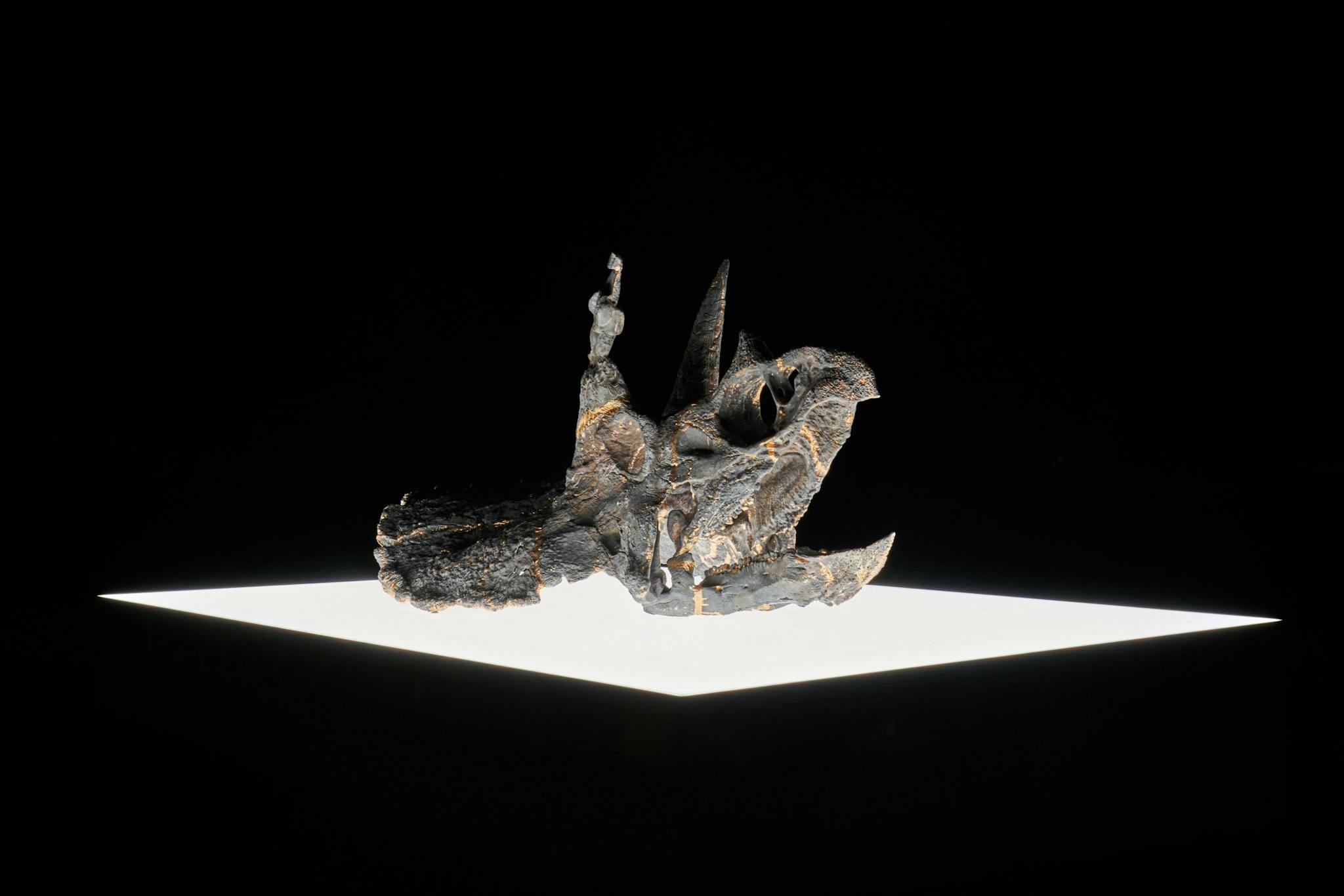
Adrián Villar Rojas, Untitled (From the Series The Language of the Enemy), 2025
KM The initiative has been running for 15 years now — the world has changed a lot in that time. How do you keep up with all these shifts?
AT Every field that engages with the contemporary shifts and evolves constantly. Our mission is to keep artists at the centre. Supporting their creative minds, listening to them, challenging them, and allowing ourselves to be challenged in return. This approach requires asking questions rather than providing answers, and it demands continuous adaptation. Because, ultimately, contemporary art is precisely that, a constant redefinition of past, present, and future, always grounded in listening to the voices that matter most: the artists.
KM In your view, how has the profile of contemporary artists changed, and what hurdles do they face today compared with the past?
AT As a society, we face many challenges, but at Audemars Piguet, we strongly believe that culture matters and requires sustained backing. One of the most pressing realities for artists today is simply being able to produce the work they envision, to give form and life to their ideas. Beyond that, they need ongoing support to build a career — not merely to deliver a one-off exhibition, but to develop their discourse and create projects that are both ambitious and defining.
KM You mentioned the interaction of art with its audience earlier, which is an aspect I find interesting. Art can’t exist without viewers, yet the nature of that audience has shifted. Traditionally, where a work was shown largely determined who would experience it. Today, however, the potential audience is vast and often unpredictable — everything can be seen everywhere, almost instantly. Does this make the work of artists and curators more challenging, or could it actually make things easier now that the audience is potentially everyone?
AT I think you described it well — art today really is for everyone. When you present a work in a public space like New York’s High Line, which welcomes around eight million visitors a year, as we did for Meriem Bennani’s Windy, co-commissioned alongside High Line Art in 2022, there is no single audience to define. It’s everyone who passes by, regardless of background, age, or gender. Maintaining that openness is something I consider essential. Art connects people, and there is always a way for a work to speak for itself. Our role as curators is merely to facilitate that conversation. At Audemars Piguet Contemporary, the belief that culture is fundamental to what defines us as humans has led us to stay open to a wide range of practices, trusting that the audience — any audience — will engage, question, and allow themselves to be challenged, just as we do ourselves.
KM L'initiative existe depuis 15 ans, et le monde a beaucoup changé depuis. Comment faites‑vous pour rester à jour face à tous ces changements ?
AT Tous les champs qui s’emparent du contemporain sont en constante évolution. Notre mission est de placer les artistes au cœur de cette dynamique : soutenir leur créativité, les écouter, les mettre au défi, et accepter, en retour, de nous laisser interpeller. Cette approche implique de poser des questions plutôt que de fournir des réponses, et exige une adaptation constante. Car, au fond, l’art contemporain, c’est une réinvention permanente du passé, du présent et de l’avenir, toujours ancrée dans l’écoute de celles et ceux qui comptent le plus : les artistes.
KM Selon vous, comment le profil des artistes contemporains a-t-il évolué, et quels obstacles rencontrent-ils aujourd’hui par rapport à autrefois ?
AT En tant que société, nous faisons face à de nombreux défis, mais chez Audemars Piguet, nous sommes convaincus que la culture compte et mérite un soutien constant. L’une des réalités les plus pressantes pour les artistes aujourd’hui est simplement de pouvoir produire le travail qu’ils imaginent, de donner forme et vie à leurs idées. Au‑delà de cela, ils ont besoin d’un soutien constant pour construire leur carrière – pas seulement pour réaliser une exposition ponctuelle, mais pour développer leur discours et mener des projets à la fois ambitieux et structurants.
KM Vous avez parlé de l’interaction de l’art avec le public, un aspect que je trouve particulièrement intéressant. L’art ne peut exister sans spectateurs, et pourtant la nature de ce public a évolué. Autrefois, le lieu d’exposition d’une œuvre déterminait en grande partie qui allait la découvrir. Aujourd’hui, le public potentiel est imprévisible : tout peut être vu partout, presque instantanément. Cela rend-il le travail des artistes et des commissaires plus complexe, ou est-ce que cela pourrait au contraire faciliter les choses, maintenant que le public peut être… tout le monde ?
AT Quand on présente une œuvre dans un espace public comme la High Line à New York, qui accueille environ huit millions de visiteurs par an – comme nous l’avons fait pour Windy de Meriem Bennani, co‑commandée avec High Line Art en 2022 –, il n’y a pas de public unique à définir. C’est tous ceux qui passent, quel que soit leur parcours, leur âge ou leur genre. Pour moi, conserver cette ouverture est essentiel. L’art relie les gens, et il y a toujours un moyen pour qu’une œuvre se fasse entendre par elle-même. Notre rôle, en tant que commissaires, est simplement de faciliter cette conversation. Chez Audemars Piguet Contemporary, la conviction que la culture est au cœur de ce qui nous définit en tant qu’êtres humains nous pousse à rester ouverts à une grande diversité de pratiques, en ayant confiance que le public – n’importe quel public – s’engagera, questionnera et se laissera interpeller, tout comme nous le faisons nous-mêmes.
Ultimately, contemporary art is precisely that, a constant redefinition of past, present, and future, always grounded in listening to the voices that matter most: the artists.
KM To what extent do you believe it is necessary for viewers to know an artist’s intentions? Or can a work, just as well, resonate on its own, without context?
AT We generally aim to meet audiences where they are, making work accessible in the public realm without requiring prior knowledge of an artist’s practice. At the same time, I recognise that appreciation often deepens with familiarity. I experienced this myself with horology at Audemars Piguet: the more I learnt, the more I could appreciate its complexity and beauty. Contemporary art works in much the same way, offering multiple layers of engagement. A first encounter might spark curiosity or surprise; over time, that reaction can lead to deeper questions. Ultimately, I believe the greatest challenge today is not defining the audience — but capturing and holding their attention.
KM As someone who looks at art for a living, can you describe what it is that captures your own attention? And is it ever possible for you to simply experience a work without wanting to know more about the artist behind it — who they are and what they hope to convey?
AT It isn’t — I can’t enter a space connected to creative disciplines without asking a million questions. At the same time, I try to honour first impressions and emotions. Connection doesn’t happen through the mind alone; it happens through the pleasure of dialogue and through empathy. Working for a company where collaboration is central, I became somewhat obsessed with understanding how artists work with their studios. This has been particularly relevant in Adrián Villar Rojas’ practice. His work is profoundly shaped by the conversations and exchanges that happen within his team, and understanding that process is key to understanding the pieces themselves. It has been fascinating to collaborate with him and observe how this collaborative approach sparks the very first gestures of meaning and representation.
KM Jusqu’à quel point pensez‑vous qu’il est nécessaire que le public connaisse les intentions d’un artiste ?
AT Nous cherchons à rencontrer le public là où il se trouve, en rendant les œuvres accessibles dans l’espace public, sans que la connaissance préalable du travail d’un artiste soit nécessaire. Cela dit, je sais que l’appréciation s’approfondit souvent avec la familiarité. J’ai moi-même vécu cela avec l’horlogerie chez Audemars Piguet : plus j’apprenais, plus je pouvais en mesurer la complexité et la beauté. L’art contemporain fonctionne de manière similaire, offrant plusieurs niveaux d’engagement. Une première rencontre peut susciter la curiosité ou la surprise ; avec le temps, cette réaction peut donner lieu à des questions plus profondes. Au fond, je crois que le plus grand défi aujourd’hui n’est pas de définir le public, mais de capter et de maintenir son attention.
KM En tant que professionnelle qui observe l’art au quotidien, pouvez-vous décrire ce qui attire votre attention ? Et est-il possible pour vous de vous contenter de vivre une œuvre, sans chercher à en savoir davantage sur l’artiste, qui il est et ce qu’il cherche à transmettre ?
AT Pas vraiment, je ne peux pas entrer dans un espace lié aux disciplines créatives sans poser mille questions. En même temps, j’essaie de respecter les premières impressions et les émotions. La connexion ne se fait pas seulement par l’esprit, elle passe par le plaisir du dialogue et par l’empathie. Travaillant pour une entreprise où la collaboration est au cœur du processus, je suis devenue presque obsessionnelle à l’idée de comprendre comment les artistes travaillent avec leurs ateliers. Cela a été particulièrement parlant dans le travail d’Adrián Villar Rojas. Ses œuvres sont profondément façonnées par les conversations et les échanges qui ont lieu au sein de son équipe, et comprendre ce processus est essentiel pour saisir les pièces elles-mêmes. Collaborer avec lui et observer comment cette approche collective fait naître les tout premiers gestes de sens et de représentation a été fascinant.
I can’t enter a space connected to creative disciplines without asking a million questions. At the same time, I try to honour first impressions and emotions. Connection doesn’t happen through the mind alone; it happens through the pleasure of dialogue and through empathy.
The latest artist to collaborate with Audemars Piguet Contemporary, Argentinian artist Adrián Villar Rojas, born in 1980 in Rosario, is known for his immersive, large‑scale sculptural projects that explore history and our place within it. His recently unveiled bronze work, Untitled (From the Series The Language of the Enemy), is on view in Le Brassus as part of the watch brand’s 150th anniversary year, transforming the Jura landscape into a stage for imagination: by merging prehistoric forms with symbolic creation, it invites the audience to rethink the boundaries between nature, culture, and time. The piece will remain in place through March 15 before travelling to the Aspen Art Museum for the solo exhibition Adrián Villar Rojas: First Gods, Lost Animals, opening June 12.
KM I imagine it to be fascinating to work with artists over several years, given that the world a project begins in often looks very different from the world in which it is first shown.
AT The process of creating a work is fluid, shaped by multiple influences, and it is fascinating to witness an artist’s ability to react, adapt, and redirect their approach in response to new ideas or circumstances. It is, among other things, the ability to welcome these changes that makes a work relevant and lasting.
KM … which must mean you keep a close eye on all the commissions you have worked on over the years?
AT I do! Collaborating so closely with an artist, as we have the privilege of doing in our roles, allows for the creation of truly extraordinary relationships. This profound engagement — being part of the unfolding of an artist’s vision — is the very reason I am so devoted to this work.
Le dernier artiste à collaborer avec Audemars Piguet Contemporary, l’Argentin Adrián Villar Rojas, né en 1980 à Rosario, est réputé pour ses projets sculpturaux immersifs à grande échelle qui explorent l'histoire et notre place en son sein. Son œuvre en bronze, Untitled (From the Series The Language of the Enemy), est présentée au Brassus dans le cadre du 150e anniversaire de la marque, transformant le paysage du Jura en véritable scène pour l’imagination. En fusionnant formes préhistoriques et création symbolique, elle invite le public à repenser les frontières entre nature, culture et temps. L’œuvre restera sur place jusqu’au 15 mars avant de rejoindre l’Aspen Art Museum pour l’exposition Adrián Villar Rojas : First Gods, Lost Animals, qui ouvrira le 12 juin 2026.
KM Cela doit être fascinant de collaborer avec des artistes sur plusieurs années, sachant que le monde dans lequel un projet commence est souvent très différent de celui dans lequel il est présenté pour la première fois.
AT Le processus de création d’une œuvre est fluide et il est fascinant d’observer la capacité d’un artiste à réagir, s’adapter et rediriger son approche face à de nouvelles idées ou circonstances. C’est, entre autres, cette capacité à accueillir ces changements qui rend une œuvre pertinente et durable.
KM … ce qui signifie que vous suivez de près toutes les commandes sur lesquelles vous avez travaillé au fil des années ?
AT Absolument ! Collaborer si étroitement avec un artiste, comme nous avons le privilège de le faire, permet de créer des relations véritablement extraordinaires. Cet engagement profond – participer au déploiement de la vision d’un artiste – est précisément la raison pour laquelle je me consacre avec autant de passion à ce travail.